
Lawn
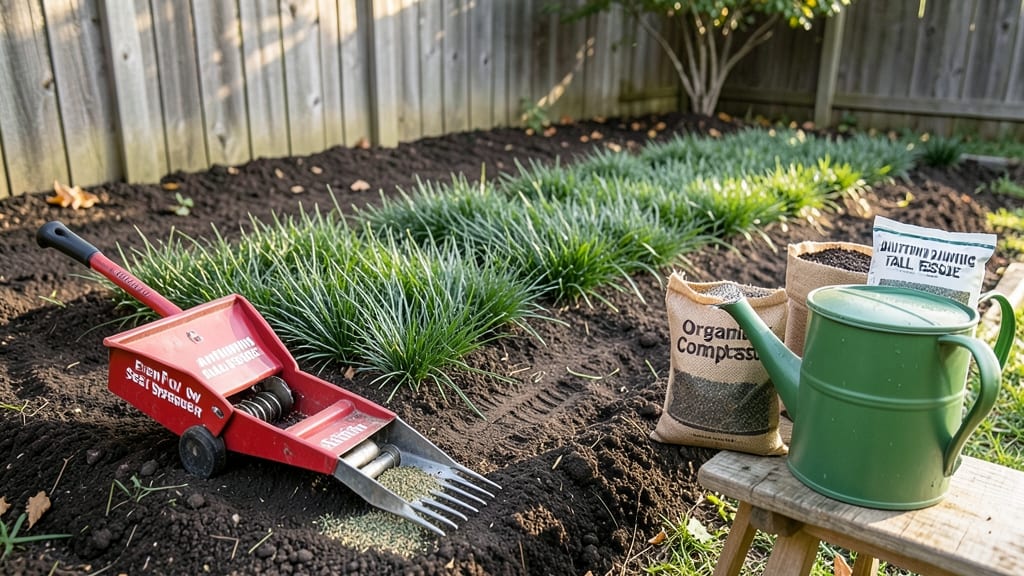
Planting grass seed in autumn gives you a head start on next year's lawn—cooler temps and fewer weeds mean stronger roots before winter. 🌱 I planted my first fall lawn in October, and by spring, I had thick green grass where bare patches used to be.
The secret isn't just timing; it's how you prep the soil and choose the right seed for your climate.
Start with a soil test to check pH and nutrients—most lawns need a boost before seeding. Rake out debris, loosen compacted soil, and spread a ¼-inch layer of compost.
Then pick a seed mix suited for your region (cool-season grasses like Kentucky bluegrass thrive in fall). Water lightly after planting to keep seeds moist without washing them away.
Within 10-14 days, you'll see tiny sprouts pushing through the soil, and by winter, those roots will be deep and established. The result? A lawn that greens up faster in spring and outcompetes weeds before they even think about sprouting.
It’s the easiest way to get a lush, low-maintenance lawn with minimal effort.
Works in most climates—just adjust timing: Northern states aim for early September to early October, while Southern regions can seed until late November. The key is getting seeds in the ground 6-8 weeks before your first hard frost. Ready to transform your patchy lawn into a thick, green carpet?
📚 In This Guide
- What you need
- Instructions
- Tips and common mistakes
- Wrapping up and next steps
What you need
- ● High-quality grass seed (choose a cool-season variety like Kentucky Bluegrass, Tall Fescue, or Perennial Ryegrass; 5–10 lbs per 1,000 sq ft for overseeding, 10–15 lbs for new lawns).
- ● Lawn fertilizer (look for a high-phosphorus blend, like 10-20-10, 1 lb per 100 sq ft).
- ● Lawn rake (bendable-tine rake for overseeding, heavy-duty for new lawns).
- ● Broadcast spreader (for even seed distribution; drop or rotary type works best).
- ● Soil tester kit (to check pH (6.0–7.0 ideal) and nutrient levels).
- ● Water source (hose with adjustable nozzle or sprinkler for gentle, consistent watering).
- ● Straw or peat moss (¼–½ inch layer to protect seeds and retain moisture).
- ● Soil conditioner (compost or gypsum to improve drainage in clay-heavy soil).
- ● Pre-emergent herbicide (if weeds are a problem; apply before seeding).
- ● Lawn roller (lightweight, 100–150 lbs, to press seed into soil).
- ● Seed germination blanket (biodegradable fabric to retain moisture in dry climates).
- ● Garden gloves (to keep hands clean and comfortable).
Step-by-step instructions for planting grass seed in autumn
Autumn's cooler temps and frequent rains create perfect conditions for grass to establish deep roots—here's how to take advantage.
🪴 Step 1: Prepare Your Lawn Site Thoroughly
Start by removing all debris, rocks, and weeds from the area. I like to use a stiff rake to drag up any lingering roots or thatch—this prevents competition for your new grass. If your lawn has bare patches, mark them with spray paint for precise reseeding later.
For compacted soil, rent a core aerator to create ¼-inch deep holes every 2-3 inches. You'll see the soil loosen and tiny plugs pop out—this lets roots penetrate easily. Water the area lightly afterward to settle the soil without compacting it again.
🌱 Step 2: Choose and Spread Grass Seed Correctly
Select a grass type suited to your climate zone—cool-season grasses like Kentucky bluegrass or fescue thrive in autumn. Use a broadcast spreader for even coverage, walking in overlapping passes to avoid missed spots. For small areas, use a hand spreader but walk in two perpendicular directions.
Apply seed at the rate recommended on the package—overseeding leads to weak, crowded growth. Lightly rake the area with a stiff-bristled rake to press seeds into the soil just enough to cover them. You want seeds buried ¼ inch deep at most; deeper planting delays germination.
💧 Step 3: Water Gently and Consistently
Keep the soil surface moist but never soggy for the first 2-3 weeks. Water lightly every morning—just enough to dampen the top ½ inch of soil. You'll know it's right when water beads up on the surface but doesn't pool.
After germination (when you see 1-inch tall grass blades), gradually reduce watering to every other day. Avoid heavy watering that can dislodge new seedlings. A good rule: if the top inch of soil feels dry, it's time to water again.
✂️ Step 4: Maintain and Protect New Growth
Wait until new grass reaches 3-4 inches tall before your first mowing—this ensures roots establish before stress. Set your mower blade to 3 inches high and never remove more than ⅓ of the blade height at once.
Keep foot traffic to a minimum for 4-6 weeks. If pets or kids must use the area, redirect them to paths where the grass is already established. You'll see thick, uniform growth within 6-8 weeks if conditions stay cool and moist.
☀️ Step 5: Prepare for Winter and Spring
Once grass reaches 4 inches tall, apply a thin layer of compost or straw mulch to protect it from winter winds. This also prevents soil erosion during heavy rains. In early spring, remove the mulch and resume normal mowing when grass starts growing actively again.
Real talk: autumn planting gives you a head start on spring lawns. The cooler weather reduces weed competition, and frequent rains do most of the watering for you. Just be patient—thick, lush growth takes time, but it's worth the wait.
Tips & tricks for perfect autumn grass planting
Here's what I've learned after seeing too many lawns fail from common mistakes—these tricks make all the difference.
Soil Prep Secret: Don't skip the aeration if your soil feels compacted. I've seen lawns where homeowners skipped this step and ended up with patchy growth because roots couldn't penetrate. For extra help, rent a manual aerator if you can't get a core aerator—even pushing the tines in by hand creates better soil contact than no aeration at all. The goal is to get those seeds in contact with loose soil, not hardpan.
Seed Placement Technique: When you're pressing seeds into the soil with your rake, aim for just enough coverage to protect them from birds but not so deep they struggle to sprout. I like to think of it as "dusting" the seeds with soil rather than burying them. If you're working with windy conditions, consider laying down a thin layer of straw mulch after planting to hold seeds in place while still allowing moisture through.
Watering Wisdom: That first 2-3 weeks of daily watering is critical—set a timer for your sprinkler so you don't forget. I've had seasons where I got busy and skipped a day, and you can see the difference immediately in how quickly new sprouts appear. Morning watering is ideal because it gives seeds time to dry slightly during the day, reducing disease risk. If you notice water pooling in low spots, adjust your sprinkler pattern to prevent waterlogging.
Mulching Move: When you apply that compost or straw mulch in Step 5, don't go too heavy—about ¼ inch is perfect. Too much can smother new growth, while too little won't provide enough protection. I've seen people use hay instead of straw, which can introduce unwanted weed seeds. Stick with clean straw or compost for best results, and make sure to remove it in spring when growth resumes.
Pro Tips for Planting Grass Seed In Autumn
- Here's what I've learned after seeing too many lawns fail from common mistakes—these tricks make all the difference.
- Soil Prep Secret: Don't skip the aeration if your soil feels compacted. I've seen lawns where homeowners skipped this...
- Seed Placement Technique: When you're pressing seeds into the soil with your rake, aim for just enough coverage to pr...
Frequently asked questions
Got questions about planting grass seed in autumn? You’re not alone! Here are some of the most common concerns—and straightforward answers—to help you get started with confidence.
When is the exact best time to plant grass seed in autumn?
The ideal window is 4–6 weeks before your first hard frost (usually late September to early October in most U.S. regions). This gives seeds time to germinate and establish roots before winter slows growth. Check your local frost dates for precision!
Do I need to water differently after planting in autumn?
Yes! Water lightly but frequently—keep the soil consistently moist (not soggy) for the first 2–3 weeks. Aim for ¼ inch of water daily, ideally in the morning. Reduce frequency as roots deepen, but avoid letting the topsoil dry out.
What if autumn temperatures drop too fast—will my grass seed still grow?
Most cool-season grasses (like fescue or ryegrass) can handle light frosts after germination, but seeds won’t sprout if soil temps dip below 50°F (10°C). If frost hits early, consider a lightweight frost blanket or delay planting until spring.
Can I plant grass seed in autumn if my lawn already has weeds?
Autumn’s cooler temps make it easier for grass to outcompete weeds. Pre-treat with a non-selective herbicide (like glyphosate) 2–3 weeks before planting, then overseed. For stubborn weeds, hand-pull or spot-treat after germination.
What’s the difference between overseeding and full lawn seeding in autumn?
| Overseeding | Full Lawn Seeding |
|---|---|
| Adds seed to existing thin or patchy lawns (ideal for cool-season grasses). | Plants seed on bare soil (new lawns or complete renovations). |
| Uses ½–1 lb of seed per 100 sq ft. | Requires 5–10 lbs of seed per 100 sq ft (depending on grass type). |
| Preps with light raking to loosen soil. | Needs full soil prep (tilling, amending, leveling). |
Both work well in autumn—choose based on your lawn’s current state!
Wrapping up and next steps
Autumn is the perfect time to plant grass seed—cooler temps, fewer weeds, and ideal moisture mean your lawn is set up for thick, vibrant growth come spring!
By choosing the right seed, prepping the soil, and following a few simple steps, you’ll transform your patchy yard into a lush carpet. 🌱
Now that you’re armed with the know-how, roll up your sleeves and get planting! Start small if needed, but remember: consistency is key. Water, wait, and watch—your future lawn will thank you. Happy seeding!