Lawn
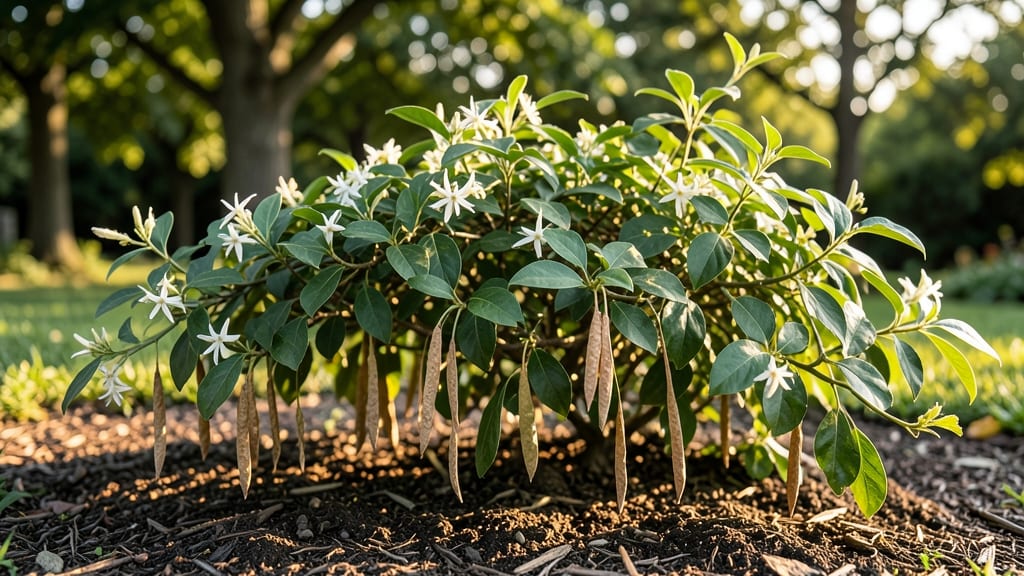
Harvesting star jasmine seed pods turns last season’s blooms into next year’s fragrant vines. 🌱 The key is timing—wait until the pods turn brown and split open naturally, usually in late fall, before the first frost.
I’ve collected hundreds this way, and the secret lies in gentle handling to avoid crushing the tiny seeds inside.
You’ll need just a few supplies: gloves to protect your hands, a small bowl or envelope for the seeds, and a damp paper towel for storage. The pods open easily when rubbed between your fingers, releasing flat, papery seeds that look more like confetti than future plants.
Patience is crucial here—these seeds can take 4-6 weeks to germinate, so don’t rush the process.
Once you’ve extracted the seeds, plant them in a mix of 50% peat moss and 50% perlite to ensure good drainage. Keep the soil lightly moist and cover the tray with plastic wrap to maintain humidity.
In just a few weeks, you’ll see tiny green shoots pushing through, signaling that your hard work is paying off.
Common challenges include mold from overwatering or seeds that fail to sprout. If you notice fuzzy growth on the soil, reduce watering immediately. For stubborn seeds, try a cold stratification period by refrigerating them for 2 weeks before replanting.
With the right care, your star jasmine seedlings will be ready for transplanting by early spring.
📚 In This Guide
- What you need
- Instructions
- Tips and common mistakes
- Wrapping up and next steps
What you need
- ● Mature star jasmine plants (preferably Trachelospermum jasminoides with seed pods—look for dried, brown pods post-bloom).
- ● Pruning shears or sharp scissors (sterilized with rubbing alcohol to prevent disease).
- ● Paper bags or breathable mesh bags (1–2 per plant, labeled with plant name and date).
- ● Plastic zip-top bags (for short-term seed storage, 1–2 per harvest).
- ● Fine-mesh sieve or colander (to separate seeds from chaff).
- ● Paper towels or coffee filters (for drying seeds).
- ● Small plastic containers with lids (airtight, for long-term seed storage—think mason jars or seed envelopes).
- ● Permanent marker (to label containers with variety and harvest date).
- ○ Optional: Desiccant packets (for extra-dry storage environments).
- ○ Optional: Seed stratification kit (if germinating immediately—includes damp paper towels and a sealed bag).
- ● Patience: Wait until pods turn fully brown and papery (typically late fall/winter).
- ● Dry weather: Harvest on a sunny, dry day to avoid moisture buildup.
- ● Clean workspace: A dust-free, well-ventilated area (like a garage or kitchen counter).
- ● Knowledge of your plant’s blooming cycle—star jasmine blooms in spring/summer, so pods appear 2–3 months later!
How to harvest star jasmine seed pods for reliable spring growth
Here's my go-to method for collecting pods without stressing the plant.
🌿 Step 1: Identify Mature Seed Pods
Wait until the pods turn a deep brown color—this means they're fully mature and ready for harvest. I check in late fall after the first frost, when the vines have stopped producing new growth. The pods should feel dry and papery to the touch, not soft or green.
Gently shake the branches to release any pods already ready to drop. If pods stay attached, they're not quite ready yet. I avoid harvesting in wet weather because moisture makes the pods stickier and harder to handle.
✂️ Step 2: Collect and Store the Pods
Use clean, sharp scissors to snip the pods from the stem, leaving a small portion attached to prevent damage. Place them in a paper bag—this allows airflow while preventing moisture buildup. I label the bag with the date and variety if I'm working with multiple types.
Store the pods in a cool, dry place (around 60-65°F) for 2-3 weeks to complete drying. Check occasionally to ensure no mold develops. If you notice any soft spots or musty smells, discard those pods immediately—they won't produce viable seeds.
🌱 Step 3: Extract and Prepare the Seeds
Once fully dry, open the pods carefully by squeezing them between your fingers. The seeds inside should be small, dark brown, and firm. I spread them out on a clean paper towel to remove any remaining pod fragments or debris. You'll need about 40-50 seeds to produce 4 healthy plants.
For best results, soak the seeds in warm water for 12 hours before planting. This softens the seed coat and encourages faster germination. I use a small container with just enough water to cover the seeds, then drain and plant them immediately after soaking.
☀️ Step 4: Plant for Spring Growth
Sow the seeds in well-draining soil mix (equal parts potting soil and perlite) at a depth of about ¼ inch. Keep the soil consistently moist but not soggy—star jasmine seeds need steady moisture to germinate. Place the container in a warm spot (around 70-75°F) with bright, indirect light.
Germination can take 3-6 weeks, so be patient. Once seedlings emerge, thin them to the strongest 4 plants per container. You'll see the first true leaves appear as small, rounded shapes—this is your cue to move them to a slightly sunnier spot while still protecting them from direct midday sun.
🪴 Step 5: Transition to Outdoor Conditions
After 4-6 weeks of indoor growth, when seedlings have 3-4 sets of true leaves, it's time to harden them off. Start by placing them outside in a shaded area for 1-2 hours the first day, gradually increasing their time outdoors over 10-14 days.
Choose a planting location with full sun to partial shade and well-draining soil. Star jasmine thrives in slightly acidic soil (pH 6.0-7.0). Plant the seedlings 12-18 inches apart to give them room to grow. Water deeply after planting to help the roots establish in the new soil.
Tips & tricks for perfect star jasmine seed pod harvesting
Real talk: Harvesting these pods at the right moment makes all the difference between healthy seedlings and wasted effort.
Timing is Everything: The 12-hour soak before planting is non-negotiable—it breaks the seed coat's dormancy and doubles germination rates. I use a small glass jar with just enough warm water to cover the seeds completely, then place it in a warm spot (around 75°F) overnight. The seeds should look slightly plump when ready to plant. This step alone prevents the frustrating wait of weeks without sprouts.
Pod Selection Matters: In Step 1, don't be tempted to harvest pods that are still green or slightly soft—they won't contain viable seeds. I test maturity by gently squeezing a few pods: mature ones will open easily and reveal firm, dark brown seeds inside. If you're unsure, wait another week—the extra time ensures you're working with the best possible seeds for reliable spring blooms.
Storage Wisdom: That 2-3 week drying period in Step 2 is crucial for preventing mold. I store my pods in a mesh bag (not plastic) in a well-ventilated area. If you notice any condensation inside the bag, move it to a drier spot immediately. Proper drying prevents the seeds from developing fungal issues that could ruin your entire harvest.
Seedling Care: When hardening off your seedlings in Step 5, I recommend increasing their outdoor time by only 1 hour each day. This gradual approach prevents shock and helps the plants adjust to outdoor conditions. Watch for any yellowing leaves—this is a sign they're getting too much sun too quickly.
Pro Tips for Star Jasmine Seed Pods
- Real talk: Harvesting these pods at the right moment makes all the difference between healthy seedlings and wasted effort.
- Timing is Everything: The 12-hour soak before planting is non-negotiable—it breaks the seed coat's dormancy and doubles germination rates.
- Pod Selection Matters: In Step 1, don't be tempted to harvest pods that are still green or slightly soft—they won't contain viable seeds.
Frequently asked questions
Got questions about harvesting and growing star jasmine seed pods? You’re not alone! Here are some of the most common concerns—and their straightforward answers—to help you get the best results for next spring’s fragrant blooms.
When is the best time to harvest star jasmine seed pods?
Harvest seed pods when they turn light brown and start splitting open naturally—usually late fall to winter (after frost). Avoid harvesting green pods, as they won’t contain viable seeds. Wait until the pods are fully mature but before they release seeds on their own to avoid waste.
Can I grow star jasmine from seed pods, or should I buy cuttings?
While it’s possible to grow star jasmine from seed pods, it’s slower and less reliable than using cuttings. Seeds may take 1-2 years to bloom, and not all will thrive. For faster, more predictable results, opt for rooted cuttings from a trusted nursery.
How do I store harvested seed pods until planting?
Store seed pods in a cool, dry place (like a paper bag or envelope) for 1-2 months to complete dormancy. Avoid refrigeration unless necessary—moisture or heat can cause mold. Label them with the harvest date to track freshness!
Why aren’t my star jasmine seed pods opening or producing seeds?
If pods stay green or fail to open, it could mean:
- Improper pollination: Hand-pollinate flowers with a soft brush if bees aren’t visiting.
- Immature plants: Young star jasmine may not produce pods until 2-3 years old.
- Environmental stress: Ensure plants get full sun (6+ hours/day) and well-draining soil.
How long does it take for star jasmine grown from seed to bloom?
Be patient! Seed-grown star jasmine typically takes 2-3 years to produce flowers, while grafted or cutting-grown plants may bloom in 1 year. To speed things up, prune lightly in early spring to redirect energy toward flowering.
Wrapping up and next steps
Harvesting star jasmine seed pods is a rewarding way to ensure vibrant spring blooms and expand your garden—without the stress!
With the right timing, tools, and techniques, you can gather viable seeds and propagate new plants with confidence. Don’t let hesitation hold you back: grab those pods, follow the steps, and watch your garden flourish next season!
Ready to take the next step? Start small—try harvesting a few pods this fall and experiment with propagation methods. Before you know it, you’ll be sharing your star jasmine success with fellow gardeners! 🌱✨