
Lawn
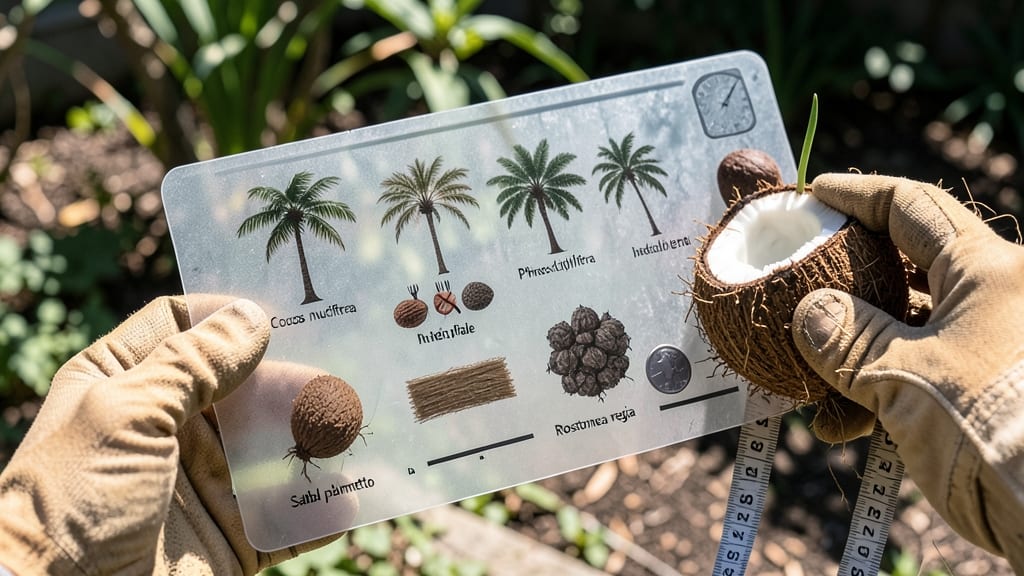
The identification of palm tree seed pods washing up after a storm could reveal the next chapter for these mysterious brown treasures. 🌴 The key to unlocking their potential starts with knowing what you're looking at—whether it's a coconut's fibrous husk, a date palm's papery envelope, or a sabal palm's glossy shell.
Each one tells a story about the tree it came from and how to handle it next.
Coconuts are the easiest to spot with their 3-foot diameter and thick, hairy exterior, while date palm seeds hide in 3-inch oval pods that split open when ripe. Sabal palms produce 1-inch round seeds encased in a leathery coat that turns black when ready.
The trick is checking for cracks or soft spots—those mean the seed inside is ready for action.
Once you've identified your pod, you're just steps away from growing a tree that could live for 50+ years. Coconuts need soaking for a week, date palm seeds prefer a warm, damp environment, and sabal seeds should be planted shallowly in sandy soil.
The right method makes all the difference between a thriving seedling and a sad, moldy mess.
This works for backyard growers, container gardeners, or anyone curious about tropical plants. Whether you're in Florida or a sunny patio in Arizona, these pods hold the potential for your very own palm forest. Let's get those seeds growing!
📚 In This Guide
- What you need
- Instructions
- Tips and common mistakes
- Wrapping up and next steps
What you need
- ● Fresh or dried palm tree seed pods: Collect 3–5 samples (or more if comparing varieties). Look for pods in different stages of maturity for a better study.
- ● Field guide or identification book: A palm-specific guide (e.g., Palms of the World by N.W. Uhl & J. Dransfield) or a reliable digital app like iNaturalist or LeafSnap.
- ● Measuring tape or ruler: A 12-inch (30 cm) ruler for noting pod length, width, and thickness.
- ● Digital camera or smartphone: With a macro mode or 10x zoom for close-up shots of textures, colors, and structures.
- ● Notebook or digital notes app: To record observations like pod shape, color, fiber texture, and location details.
- ● Magnifying glass (5x–10x): Essential for spotting fine details like seed scars, fibers, or surface patterns.
- ● Pruning shears or sharp knife: For safely cutting pods from trees (if harvesting yourself). Use sterilized tools to avoid spreading disease.
- ● Plastic bags or breathable mesh bags: To store pods temporarily (avoid airtight containers to prevent mold).
- ● Reference images: Print or save high-res images of common palm pods (e.g., Cocos nucifera, Phoenix dactylifera, Sabal palmetto) for comparison.
- ● Drying rack or paper towels: To air-dry pods if you plan to preserve them long-term.
- ● Seed germination kit: If you’re curious about growing palm trees from seed (includes peat moss and seed trays).
- ● Portable scale: For weighing pods (helpful for scientific comparisons).
- ● UV flashlight: To check for fluorescence in pod fibers under blacklight (some species glow!).
- ● Local botanist or gardening community: For verification or fun group ID challenges!
How to identify palm tree seed pods: Step-by-Step guide
Here's how I break down palm seed pods—no botanist degree required.
🌿 Step 1: Observe the Pod's Overall Shape and Size
Palm seed pods vary wildly, but most fall into three basic shapes: spherical, oval, or elongated. Measure the pod's diameter—most common types range from 1 to 6 inches. A coconut, for example, is a classic spherical pod with a fibrous husk, while date palm pods are long and cylindrical, often 3-4 inches long and 1-2 inches wide.
Run your fingers along the surface. Smooth, hard pods like those from the queen palm indicate a thick, protective layer, while rough, fibrous ones (like the palmetto) feel like coarse sandpaper. This texture gives you your first clue about the palm family.
🌱 Step 2: Examine the Pod's Opening and Seed Structure
Look for the pod's natural opening—some split cleanly down the middle (like a coconut), while others have a small apical hole (the tip). If the pod is intact, gently tap it to listen for the seed inside. A solid thud suggests a hard seed coat, while a hollow sound means it's empty or fibrous.
Inside, you'll find either a single large seed (like a coconut) or multiple smaller seeds embedded in fibrous material. Date palm pods, for instance, contain 1-3 large, flat seeds surrounded by sweet, edible flesh when ripe.
☀️ Step 3: Check for Fibers, Scales, or Spines
Inspect the pod's exterior for distinctive features. Coconuts have long, tangled fibers, while the Mexican fan palm produces pods covered in small, overlapping scales. Some pods, like those from the saw palmetto, have sharp spines along the edges—handle them carefully.
If the pod is dry and papery, it might belong to a palm like the Chinese fan palm, where the pod splits open to reveal small, winged seeds. Fresh pods often have a waxy or slightly sticky coating, which can help identify recent drops.
🪴 Step 4: Note the Attachment Point and Stem
Where the pod connects to the stem tells you a lot. Some palms produce pods directly from the trunk (like the coconut palm), while others grow on long, drooping stalks (common in date palms). The attachment point might still have a small scar or dried stem fragment—this can be a dead giveaway for the species.
If the pod is still attached to a stalk, observe its length and thickness. Long, thin stalks often belong to palms like the sabal palm, while thick, sturdy ones might indicate a species like the royal palm. Take a photo if possible—details like this are invaluable for identification.
⏰ Step 5: Compare to Known Palm Families
Cross-reference what you’ve observed with known palm families. For example, Arecaceae (the largest palm family) includes coconuts, dates, and palmettos, each with distinct pod shapes. Use a field guide or reliable online resource to match your findings—look for keywords like "fibrous husk," "smooth shell," or "winged seeds."
Real talk: Some pods are tricky, and that’s okay. If you’re still unsure, note every detail—pod size, texture, seed arrangement—and share it with a local nursery or gardening forum. More eyes mean faster answers.
Tips & tricks for mastering palm tree seed pod identification
These field-tested strategies will help you spot the subtle clues that make all the difference in identifying palm seed pods.
Surface Texture is Your First Clue: Pay extra attention to the pod's surface in Step 1—this is where most beginners miss key details. A coconut's fibrous husk is unmistakable, but queen palm pods have a smooth, almost waxy surface that feels surprisingly slick. Run your fingers along the pod's length to detect these subtle differences. Remember, rough textures often indicate protective adaptations against predators, while smooth surfaces suggest a different ecological role.
The Tap Test Reveals Hidden Secrets: In Step 2, when you tap the pod to listen for the seed inside, focus on two things: the sound's pitch and its consistency. A solid, deep thud with a slightly metallic tone usually means a hard seed coat, while a dull thud with a hollow echo suggests fibrous material. Pro tip: Tap near the pod's widest point for the most accurate reading—this is where seeds typically cluster.
Photograph the Attachment Point: Step 4's attachment point details are often overlooked, but they're critical. Take a photo of where the pod connects to the stem—this scar pattern can be as distinctive as fingerprints. Notice if the attachment is smooth (indicating a clean break) or jagged (suggesting animal intervention). For stubborn pods, gently wiggle the stem while observing the connection point—this can reveal hidden clues about how the pod naturally detaches.
Compare to Known Families Visually: When you reach Step 5, create a simple visual reference chart using your phone. Snap photos of pods you've identified (like coconut and date palm examples) and compare them side-by-side with your unknown specimen. Many palm families have distinctive color patterns—look for subtle veining or mottling that might not be obvious at first glance. This visual comparison method works better than memory alone for tricky identifications.
Pro Tips for Identification Palm Tree Seed Pods
- These field-tested strategies will help you spot the subtle clues that make all the difference in identifying palm seed pods.
- Surface Texture is Your First Clue: Pay extra attention to the pod's surface in Step 1—this is where most beginners miss key details.
- The Tap Test Reveals Hidden Secrets: In Step 2, when you tap the pod to listen for the seed inside, focus on two things: the sound's pitch and its consistency.
Frequently asked questions
Got questions about identifying palm tree seed pods? You’re not alone! Here are some of the most common queries—plus quick, practical answers to help you navigate the process like a pro.
How do I tell if a seed pod is from a palm tree vs. another plant?
Palm tree seed pods often have fibrous husks, a single large seed, or a hard, woody shell. Compare them to other plants: nuts (like acorns) have caps, while fruits (like coconuts) have fleshy exteriors. Look for palmate or pinnate leaf scars near the pod—these are dead giveaways!
When is the best time to collect palm tree seed pods?
The ideal time is when pods are brown, dry, and slightly shriveled but haven’t split open yet. This usually happens in late fall to winter, depending on your climate. Avoid collecting when pods are green—they won’t germinate well and may attract pests.
Can I grow a palm tree from a seed pod I found in my yard?
Start by soaking the pod in warm water for 24–48 hours to soften the husk, then plant it in well-draining soil at a slight angle. Keep it in a warm, humid spot (like a greenhouse) and be patient—germination can take months to years!
What should I do if my seed pod smells bad or has mold?
Toss it! A foul odor or mold means the pod is rotten or infested, which can harm your plants or even attract pests. Always inspect pods for soft spots, discoloration, or slimy textures before handling. When in doubt, compost it safely instead.
Are there palm tree seed pods that are toxic or unsafe to handle?
Most palm seed pods are non-toxic, but a few (like Sapucaia palms) can cause skin irritation. Wear gloves when handling unknown pods, and avoid ingesting any part of them. If you’re unsure, research the specific palm species or consult a local nursery.
Wrapping up and next steps
Identifying palm tree seed pods doesn’t have to be a challenge—just remember the key features like shape, size, and texture, and compare them to common varieties.
Whether you’re a gardener, nature enthusiast, or curious homeowner, recognizing these pods can unlock fascinating insights into your local ecosystem or help you grow new plants! 🌿
Ready to take the next step? Share your findings with fellow plant lovers or start a small palm tree from one of those pods—just be sure to research local growing conditions first. Happy exploring!