
Planting
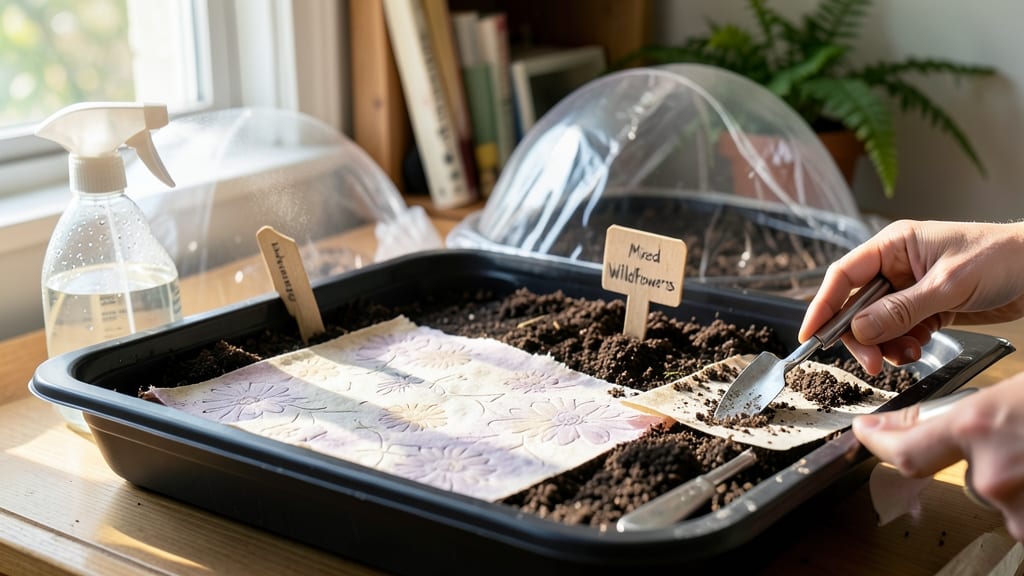
Planting wildflower seed paper transforms bare ground into a pollinator paradise with almost no effort. ✨ The key is timing—plant in early spring or fall when soil is cool (50-70°F) and rain is reliable, so seeds make contact without drying out.
I’ve planted mine in both seasons, and the fall version always outperforms spring in my zone 6 garden.
Start with a sunny spot where grass won’t compete—wildflowers thrive with at least 6 hours of sunlight daily. Loosen the soil slightly with a rake or your hands, then lay the seed paper flat like a blanket.
Press it gently into the earth, especially along edges, to ensure full contact with the soil. This step makes all the difference for germination rates.
Water lightly but consistently for the first 2 weeks—just enough to keep the paper damp, not soggy. Once sprouts appear, you’ll see tiny green shoots pushing through in about 7-14 days.
The real magic happens when they self-sow: in just one season, you’ll have clusters of blooms that multiply year after year with no extra work.
Common mistakes? Planting too deep (seeds need light to germinate) or skipping the initial watering. Even in drought-prone areas, these seeds adapt—just plant after a natural rain if possible. By summer, you’ll have a meadow of color that hummingbirds and bees will fight over.
📚 In This Guide
- What you need
- Instructions
- Tips and common mistakes
- Wrapping up and next steps
What you need
- ● Wildflower seed paper – Choose a size that fits your space (e.g., 4"x6" or 8"x10" sheets).
- ● Water – A spray bottle or small watering can (avoid soaking—gentle misting works best!).
- ○ Gloves – Optional but helpful for handling soil and seeds without dirt buildup.
- ● Small trowel or fingers – For gently pressing seed paper into the soil.
- ○ Waterproof marker (optional) – To label your seed paper if planting multiple varieties.
- ● Sunlight – Full sun to partial shade (6+ hours of sunlight daily for best results).
- ● Soil – Well-draining, loose soil (avoid compacted or waterlogged areas).
- ● Timing – Plant in spring or fall for optimal germination (check seed paper instructions for specifics).
- ● Compost or fertilizer – Lightly mix into soil for nutrient boost (especially for poor soil).
- ● Mulch or pebbles – To keep seed paper in place and retain moisture.
- ● Planting journal – Track bloom times, sunlight exposure, and growth progress!
Step-by-step instructions for planting wildflower seed paper
Here's how to transform those delicate seed papers into a thriving, self-sustaining meadow.
🌱 Step 1: Choose the Perfect Planting Location
Wildflower seed paper thrives in full sun to partial shade, with at least 6 hours of sunlight daily. Scan your space for areas with good drainage—wildflowers hate soggy roots. I always avoid low spots where water pools after rain, as that leads to rot and poor germination.
If you're planting in a garden bed, clear away existing weeds first. A light raking loosens the soil surface just enough for the seeds to make contact with the earth. For containers, use a well-draining potting mix—wildflower blends often include native species that prefer lean, rocky soil over rich compost.
💧 Step 2: Prepare the Seed Paper and Soil
Gently unfold the seed paper and place it on a flat surface. You'll notice the edges are often slightly thicker—this is where the most seeds are concentrated. If your paper has a glue or adhesive backing, skip this step, but if it's just pressed seeds, lightly mist the back with water to activate the binding.
Work the soil until it's crumbly and slightly moist—like a damp sponge. For garden beds, loosen the top 2-3 inches with a rake or hoe. If planting in containers, fill them ¾ full with soil, leaving room for watering. Press the seed paper firmly into place, ensuring it lies flat against the soil.
☀️ Step 3: Secure and Water Gently
Use small garden staples or decorative pins to pin the seed paper down at the edges. This prevents wind from blowing it away while allowing seeds to make contact with the soil. I like using brass or copper pins—they add a rustic touch and won’t rust over time.
Water lightly but thoroughly until the soil feels evenly moist to the touch. Avoid soaking the paper, as excess water can wash seeds away or create a barrier between the seeds and soil. A gentle misting from a watering can works best. You’ll know it’s right when the soil looks damp but not glistening.
⏰ Step 4: Monitor and Encourage Germination
Keep the soil consistently moist for the first 2-4 weeks—this is critical for germination. Wildflower seeds often need steady moisture to break dormancy. I set up a drip irrigation line or use a self-watering tray under containers to maintain even moisture without overwatering.
Once the first sprouts appear—usually 10-21 days after planting—reduce watering slightly. Young seedlings need moisture, but too much can cause them to rot. You’ll see tiny green shoots first, followed by the first true leaves (smaller than cotyledons and more defined). This is your signal to let the soil dry out a bit between waterings.
🌿 Step 5: Let Nature Take Over
After the seedlings reach 2-3 inches tall, you can remove the staples or pins—they’ll be strong enough to stand on their own. At this stage, wildflowers are ready to self-sow, meaning they’ll drop seeds and spread naturally. I let mine go wild, but if you prefer a tidier look, deadhead spent blooms in late summer to encourage a second flush of flowers.
Wildflower seed paper is designed to bloom for years, so minimal maintenance is needed. Just watch for weeds—pull them early before they compete with your seedlings. With time, your wildflower meadow will become a self-sustaining ecosystem, attracting pollinators and requiring almost no effort from you.
Tips & tricks for planting wildflower seed paper
Here's what nobody tells you about making your wildflower seed paper truly thrive.
Location is Everything: That 6 hours of sunlight rule is non-negotiable for most wildflower varieties. If your space gets less, choose shade-tolerant seed papers specifically labeled for low-light conditions. I've seen dramatic differences in blooms when planting in spots that get morning sun versus afternoon shade—morning sun tends to produce more vibrant flowers.
Soil Prep Secret: Don't just scratch the surface—loosen that top 2-3 inches of soil thoroughly. Wildflower seeds need good contact with soil to germinate properly. I use a broadfork to aerate garden beds before planting, which also helps with drainage. For containers, tap them gently on the table after filling to settle the soil before pressing down the seed paper.
Watering Wisdom: The "damp but not glistening" test is your best friend. I've learned this the hard way—overwatering can actually suffocate seeds by creating a waterlogged barrier. Use a spray bottle for the first watering to avoid disturbing the delicate seed paper. After that, water at the soil line rather than overhead to prevent washing seeds away.
Germination Timing: Those 2-4 weeks of consistent moisture are crucial, but don't panic if germination takes longer. Some native wildflower seeds need cold stratification (a period of cold) to break dormancy. If you're in a warm climate, you might see sprouts in as little as 7 days, while cooler regions could take the full 4 weeks. The key is patience—keep that soil evenly moist regardless of the timeline.
Pro Tips for Plant Wildflower Seed Paper
- Here's what nobody tells you about making your wildflower seed paper truly thrive.
- Location is Everything: That 6 hours of sunlight rule is non-negotiable for most wildflower varieties.
- Soil Prep Secret: Don't just scratch the surface—loosen that top 2-3 inches of soil thoroughly.
Frequently asked questions
Got questions about planting wildflower seed paper?
You’re not alone! Here are answers to the most common concerns—so you can grow a vibrant, self-sustaining garden with confidence.
When is the best time to plant wildflower seed paper?
The ideal time is early spring (just after the last frost) or fall (4-6 weeks before your first frost). Spring gives seeds time to establish roots before summer heat, while fall planting takes advantage of cooler temps and winter moisture. Avoid planting in extreme heat or drought—seeds need consistent moisture to germinate!
How much water does seed paper need to germinate?
Keep the soil consistently moist (not soggy!) for the first 2-3 weeks. Water gently 1-2 times daily if planting in dry conditions, or mist lightly if using in containers. Once sprouted, reduce watering to 1-2 times per week—wildflowers thrive in drought once established. A light layer of mulch helps retain moisture.
Can I plant wildflower seed paper in containers or only in the ground?
Seed paper works in containers, hanging baskets, or directly in garden beds. For pots, use a well-draining mix (like cactus/succulent soil) and ensure drainage holes. Hang baskets in partial sun (4+ hours daily). Just avoid deep planters—wildflowers have shallow roots and prefer room to spread.
Will the flowers come back every year, or do I need to replant?
Many wildflower seed papers contain self-seeding varieties (like cosmos, black-eyed Susans, or poppies), which drop new seeds to regrow for 2-5 years! Others (annuals) may need replanting. Check your packet for specifics—some blends are designed for perennial performance. Deadhead spent blooms to encourage more flowers!
Are wildflower seed papers safe for pets or kids?
Most wildflower seed papers are non-toxic and pet/kid-friendly, but always verify the specific flowers included (e.g., foxglove or larkspur can be harmful). Opt for pet-safe blends (like marigolds, sunflowers, or zinnias) if you have curious pups or little ones. When in doubt, keep plants out of reach until fully identified.
What if my seed paper doesn’t germinate?
Don’t worry—seeds need patience and the right conditions. Try these fixes:
- Light exposure: Some seeds need sunlight to germinate; place paper on bare soil (don’t bury deeply).
- Moisture: If soil dries out, soak the area and cover with a damp towel for 24 hours.
- Temperature: Seeds often struggle in extreme heat or cold—plant in spring/fall.
- Age: Old seed paper (over 1 year) may have lost viability. Store unplanted paper in a cool, dry place.
Wrapping up and next steps
Planting wildflower seed paper is a simple yet rewarding way to bring beauty and biodiversity to your garden—with minimal effort!
By following these steps, you’ll enjoy vibrant blooms for years, thanks to their self-sowing nature. Now that you’re ready to plant, why not share the joy? Invite friends or neighbors to join you in creating pollinator-friendly spaces.
Start small, experiment with colors, and watch your garden transform into a thriving ecosystem! 🌸