
Lawn
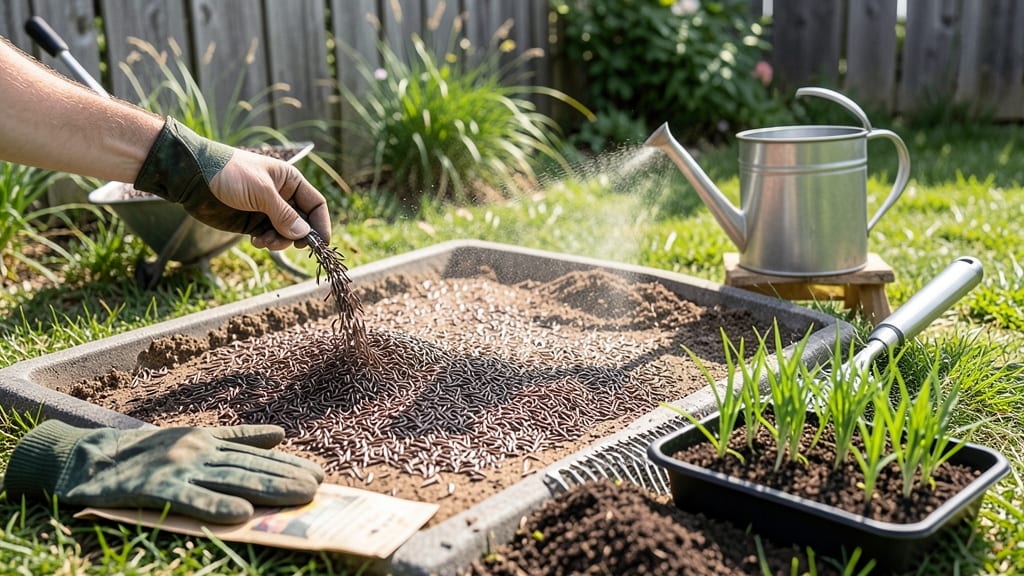
The best time to seed grass in fall is late September to mid-October, when your lawn can transform from patchy to lush before spring. 🌱 The cooler fall air and warm soil create perfect conditions for deep root growth, while fewer weeds compete for space.
I’ve seeded in both spring and fall, and fall always wins—thicker grass, faster establishment, and less watering stress.
Soil temperature is the secret weapon: aim for 60-70°F—ideal for seed germination without overheating. In the Northern Hemisphere, this window aligns with September-October; in the Southern Hemisphere, it’s March-April.
Test your soil with a simple thermometer or dig a few inches down to check—it should feel warm but not scorching.
You’ll end up with a lawn that stays green longer, handles winter better, and outcompetes weeds naturally. The key is acting before the first hard frost: seeds need 4-6 weeks to establish roots before dormancy. Skip the late-season rush—waiting too long means weak germination and winter kill.
Works for both cool-season grasses (like fescue and ryegrass) and warm-season varieties (like Bermuda, if you’re in a mild climate). The same principles apply whether you’re overseeding or starting fresh. Here’s how to nail the timing and prep every time.
📚 In This Guide
- What you need
- Instructions
- Tips and common mistakes
- Wrapping up and next steps
What you need
- ● Grass seed: Choose a high-quality, cool-season blend (e.g., Kentucky bluegrass, fescue, or ryegrass). Aim for 10–15 lbs per 1,000 sq ft, depending on seed type and desired density.
- ○ Topsoil or compost: ¼–½ inch layer to cover seeds gently (optional but recommended for thin soil).
- ● Starter fertilizer: Low-nitrogen (5–10%) with phosphorus and potassium to encourage root growth. Use ½ lb per 1,000 sq ft.
- ● Mulch (straw or peat moss): ¼-inch layer to retain moisture and protect seeds from birds.
- ● Rake (bow or leaf rake): For loosening soil and leveling the area.
- ● Broadcast spreader: Ensures even seed distribution (manual or drop-type).
- ● Garden hose with nozzle: For gentle watering (avoid pressure sprays).
- ○ Lawn roller (optional): Lightweight to press seed into soil (only if soil is dry).
- ○ Soil test kit (optional): To check pH (ideal: 6.0–7.0) before seeding.
- ● Weather forecast: Choose a 5–7 day window with no rain predicted (or use a clear tarp for coverage).
- ● Soil prep: Mow existing grass short (1–1.5 inches), remove debris, and loosen soil to ¼ inch deep.
- ● Water access: Plan for daily light watering (10–15 mins) until seeds germinate (7–21 days).
Step-by-Step guide for fall grass seeding success
Timing is everything—here’s how to nail that late-September to mid-October window for strong, drought-resistant grass.
🌱 Step 1: Prepare the Soil Before Seeding
The secret to fall success starts 4-6 weeks before seeding when soil temperatures drop to 60-70°F. Rake away debris and loosen the top 2-3 inches of soil with a garden fork or tiller to break up compaction. If your lawn has bare spots, aerate first—use a core aerator to pull 3-4 inch deep plugs every 3-4 inches apart for better seed-to-soil contact.
Test soil pH with a kit—ideal range is 6.0-7.0. If your soil is too acidic (below 6.0), apply lime according to package instructions 2-3 weeks before seeding. This ensures seeds germinate quickly and roots establish before winter slows growth. Avoid fertilizing now—you’ll wait until after germination for nutrients.
💧 Step 2: Choose and Spread Seed at the Right Time
Pick a cool, overcast day when temperatures are below 80°F and forecast shows no rain for 24 hours. Scatter 10-15 lbs of seed per 1,000 sq ft (or follow label rates) using a broadcast spreader for even coverage. Lightly rake seeds into the soil—¼ inch deep for fine grasses like fescue, ⅛ inch for bluegrass—to protect them from birds while keeping them close enough to surface moisture.
Watch for light frost warnings—seed after the first frost but before ground freezes. If rain is forecast within 48 hours, hold off until conditions dry. The goal is consistent moisture without waterlogging, which drowns seeds before germination.
☀️ Step 3: Water Strategically for Germination
Water immediately after seeding to settle seeds into soil, then keep the top 1 inch of soil moist for 14-21 days—the critical germination window. Use a sprinkler with fine mist to avoid dislodging seeds, and water lightly twice daily (morning and evening) instead of deep soakings. You’ll know you’re doing it right when the soil surface stays damp but not soggy—like a wrung-out sponge.
Once seedlings reach 2-3 inches tall (about 3-4 weeks after seeding), switch to deep, infrequent watering—1 inch per week—to encourage deep root growth. Avoid walking on new grass until it’s 3-4 inches tall to prevent damage to tender roots.
✂️ Step 4: Maintain Through Fall for Winter Readiness
Skip fertilizing until 6-8 weeks after germination—you want roots to establish before feeding. Instead, apply a light layer of straw mulch (not hay—it can sprout weeds) to protect seeds from drying winds and temperature swings. Remove mulch once grass reaches 3 inches to avoid smothering growth.
Mow when grass hits 3-4 inches tall, then reduce height by no more than ⅓ each time. By late November, stop watering unless your region gets consistent snow cover—dormant grass needs less moisture. The roots you’ve built now will give you a lush, drought-resistant lawn next spring.
⏰ Step 5: Time Your Final Prep Before Winter
In early December, apply a winterizer fertilizer (high in potassium and phosphorus) to strengthen roots through dormancy. Avoid nitrogen-heavy feeds now—it promotes tender top growth that freezes. If your area gets heavy snow, shovel a path through the lawn to prevent compaction from foot traffic.
Mark your calendar for late February—that’s when you’ll start prepping for spring overseeding. But for now, step back and admire the work you’ve done. Those roots growing now are the foundation of a thicker, greener lawn come spring.
Tips & tricks for perfect fall grass seeding
Here's how to turn that late-September to mid-October window into your lawn's strongest foundation yet.
Soil Temperature Secret: The 60-70°F soil temperature range in Step 1 is your golden window—it's when seeds germinate fastest without competing with summer heat. I've seen seeds fail when planted too early (soil still above 70°F) or too late (below 50°F). Use a soil thermometer for precision, especially in cooler climates where fall cools quickly. The deeper you loosen that 2-3 inch layer, the better roots will establish before winter dormancy.
Weather Watching: That 24-hour rain-free window in Step 2 is non-negotiable for proper seed-to-soil contact. I always check the National Weather Service's hourly forecast app for "light frost" warnings—seeding after the first frost but before ground freezes is critical. Pro tip: If you're seeding large areas, break it into sections so you can finish quickly if weather changes. The goal is to get seeds down when temperatures are below 80°F but before nighttime lows drop below freezing.
Watering Precision: The 14-21 day germination window requires consistent moisture, but here's what nobody tells you: Your sprinkler should deliver water at the rate of about 0.1 inch per hour—any faster and you'll dislodge seeds, any slower and you risk drying. I set a rain gauge in the lawn to monitor—this is where most failures happen. Once you see those 2-3 inch seedlings in 3-4 weeks, you can switch to deep watering, but only after they've established that critical root network.
Frost Timing: The late November watering cutoff is your last chance to help roots establish before dormancy. In regions with consistent snow cover, you can continue light watering—snow provides natural moisture. But if you're in a freeze-thaw cycle area, stop completely to prevent heaving. That winterizer fertilizer in early December is your insurance policy—it's not about green growth now, but about building root mass that will explode in spring.
Pro Tips for Best Time To Seed Grass In Fall
- Here's how to turn that late-September to mid-October window into your lawn's strongest foundation yet.
- Soil Temperature Secret: The 60-70°F soil temperature range in Step 1 is your golden window—it's when seeds germinate fastest without competing with summer heat.
- Weather Watching: That 24-hour rain-free window in Step 2 is non-negotiable for proper seed-to-soil contact.
Frequently asked questions
Got questions about seeding your lawn in the fall? You’re not alone! Here are some of the most common queries—and their straightforward answers—to help you nail your grass-seeding game this season.
What’s the exact window for fall grass seeding?
The sweet spot is late September to mid-October, when soil temps hover between 60–75°F. This gives seeds time to germinate before winter sets in. Check your local USDA zone for precise timing—cooler climates (like Zone 4) can start earlier, while warmer zones (Zone 8+) may extend into November.
Can I seed grass too late in the fall?
Yes! If you miss the ideal window, don’t panic. You can seed until the first hard frost (when soil temps drop below 40°F). However, germination slows dramatically, and seedlings may struggle to establish before winter. For best results, aim to finish at least 4–6 weeks before frost.
How do I keep newly seeded grass from washing away?
Use straw or erosion control blankets to protect seeds, and water lightly but frequently—about ¼ inch per day—to keep soil moist but not soggy. Avoid heavy foot traffic or rain until germination (usually 7–21 days). A spray nozzle on your hose helps distribute water evenly without disturbing seeds.
What if my soil is too cold or too hot for seeding?
Cold soil (<50°F) stalls germination; hot soil (>80°F) dries seeds out. Test your soil with a thermometer (bury it 3 inches deep). If temps are off, wait or use a seed starter fertilizer to jumpstart growth. For hot soil, seed in the early morning or late evening to reduce stress.
Can I overseed an existing lawn in the fall?
Fall is perfect for overseeding to fill thin patches. Mow your lawn short (1–1.5 inches), rake to loosen soil, spread seed, and water gently. Choose a cool-season grass (like Kentucky bluegrass or fescue) for best results. Overseeding can boost density by 30–50% with minimal effort.
Wrapping up and next steps
Fall is your golden opportunity to grow a lush, resilient lawn—late September to mid-October is the sweet spot for seeding! With cooler temps, fewer weeds, and ideal moisture, your grass will establish deep roots before winter, setting you up for a stunning spring.
Don’t overthink it: prep your soil, choose the right seed, and stay patient as nature does the heavy lifting.
Ready to roll? Grab your supplies, mark your calendar, and get seeding! Your future lawn will thank you—and so will your neighbors. 🌱✨