
Size
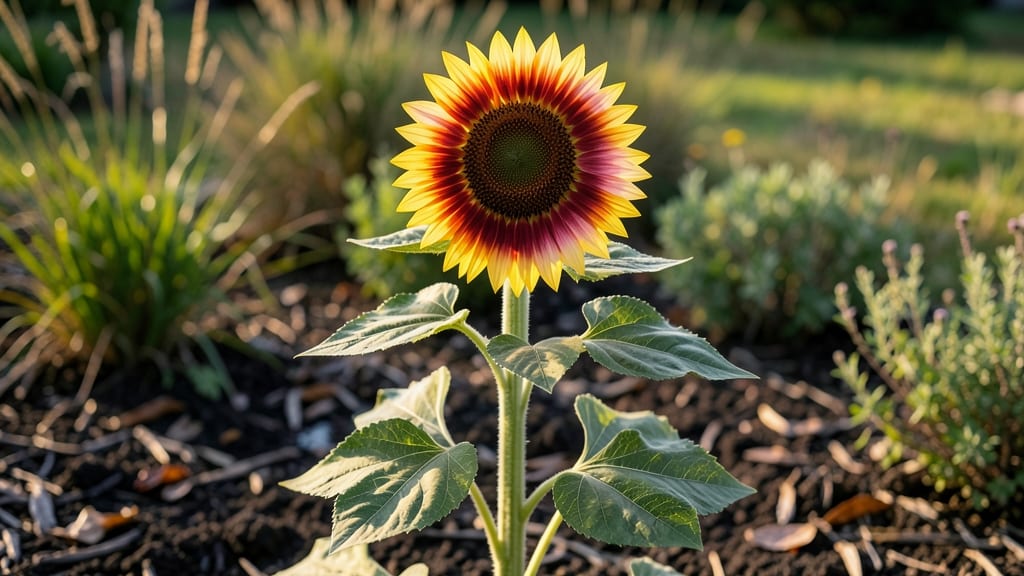
Growing rainbow sunflowers from seed turns your garden into a towering, colorful masterpiece. 🌻 These giants need 6-8 hours of direct sun daily and deep, well-draining soil to reach their full potential—some varieties stretch over 10 feet tall!
The secret to their vibrant blooms lies in proper spacing and support, which I’ll break down so you avoid flopping stems and crowded plants.
Start by preparing a sunny spot with loose, nutrient-rich soil mixed with compost. Plant seeds 1 inch deep and 12-18 inches apart, depending on the variety—dwarf types need less room, while giants require wider spacing.
A sturdy stake or cage inserted at planting time prevents top-heavy stems from snapping in wind or rain. Water deeply once a week (more in extreme heat) to encourage strong root growth.
By mid-summer, you’ll watch velvety petals unfurl in shades of red, yellow, and orange, attracting pollinators while adding drama to your landscape. The key is patience—rainbow sunflowers take 80-100 days to bloom, but the wait is worth it for stems thick enough to harvest as cut flowers or birdseed treats.
Even beginners can master this with the right prep.
Pro tip: Mix shorter varieties with taller ones to create a natural staircase effect, and deadhead spent blooms to encourage more flowers. These sunflowers thrive in USDA Zones 2-11, making them versatile for almost any garden. Ready to grow a sun-soaked spectacle?
📚 In This Guide
- What you need
- Instructions
- Tips and common mistakes
- Wrapping up and next steps
What you need
- ● Rainbow sunflower seeds: Choose heirloom or hybrid varieties (e.g., 'Autumn Beauty,' 'Moulin Rouge,' or 'Teddy Bear'). Buy 50+ seeds for a small garden or 200+ seeds for a full border.
- ● Well-draining potting soil or garden soil: 10-20 lbs (depending on container size or garden plot). Mix in compost for nutrients.
- ● Containers or garden bed: Containers: 5-10 gallon pots (1 per plant) with drainage holes.
- ● Garden bed: 6+ inches deep and 18+ inches apart for mature spacing (check your bloom height chart!).
- ● Watering can or hose with a gentle spray nozzle.
- ○ Plant labels: Mark varieties to track growth (optional but helpful!).
- ● Garden gloves (to protect your hands from prickly stems 🌱).
- ● Trowel or small shovel for transplanting seedlings.
- ● Mulch (straw or wood chips) to retain moisture and suppress weeds.
- ● Fertilizer (balanced 10-10-10 or compost tea) for extra nutrients.
- ● Sunlight meter or app to confirm your garden gets 6+ hours of direct sun daily.
Step-by-step guide to planting rainbow sunflower seeds for stunning height variety
Here’s how to turn your garden into a towering, colorful display using sunflower varieties that bloom at different heights.
🌱 Step 1: Choose and Prepare Your Sunflower Varieties
Select 4-6 different rainbow sunflower varieties to create visual interest, with heights ranging from 3 feet to 12 feet. I recommend pairing dwarf varieties like 'Teddy Bear' (3-4 feet) with giants like 'Russian Giant' (12-15 feet) for dramatic contrast. Check each seed packet for mature height—this ensures proper spacing later.
Soak seeds overnight in lukewarm water to soften the outer shell and speed up germination. This step isn’t mandatory, but it gives you a 2-3 day head start on seedlings. Drain the water before planting to prevent rot. I like to place seeds in a shallow dish with a damp paper towel for easy handling.
☀️ Step 2: Select and Prepare the Planting Site
Sunflowers thrive in full sun (6-8 hours daily) and well-draining soil with a pH between 6.0 and 7.5. Test your soil’s pH before planting—amend with lime if it’s too acidic or sulfur if it’s too alkaline. The 4 plants you’re growing will need at least 20 square feet of space, with taller varieties planted at the north end to avoid shading shorter ones.
Loosen the soil to a depth of 12 inches using a garden fork or tiller. Mix in 2-3 inches of compost to enrich the soil naturally. Avoid fresh manure, which can burn tender seedlings. If your soil is heavy clay, add sand or perlite to improve drainage—sunflowers hate soggy roots.
🪴 Step 3: Plant Seeds at the Correct Depth and Spacing
Plant seeds 1 inch deep and 6-12 inches apart, depending on the variety’s mature height. Dwarf sunflowers can be spaced 6 inches apart, while giants need 18-24 inches to support their massive stems. I use a small stick to mark each planting spot—this prevents overcrowding and makes thinning easier later.
Water the soil deeply after planting to settle seeds and encourage root contact with moisture. Keep the soil evenly moist (not soggy) until germination, which typically occurs in 7-14 days. Avoid watering from above once sprouts appear—direct water can dislodge seedlings or cause disease.
💧 Step 4: Maintain Moisture and Fertility for Strong Growth
Sunflowers need 1-2 inches of water per week, especially during flowering. I water deeply 2-3 times per week in dry climates, focusing on the base of the plant to prevent fungal issues. Mulch with 2-3 inches of straw or wood chips to retain moisture and suppress weeds—this also keeps soil temperatures stable for root development.
Fertilize lightly 3-4 weeks after germination with a balanced 10-10-10 fertilizer (follow package rates). Too much nitrogen promotes leafy growth at the expense of blooms. Watch for yellowing leaves—this often signals overwatering or nutrient deficiency. Adjust care based on what you observe.
✂️ Step 5: Support Tall Varieties and Harvest for Long-Lasting Blooms
Stake tall varieties (6 feet and taller) with bamboo stakes or metal cages before they top over. Tie stems loosely with soft plant ties every 2 feet to prevent wind damage. I avoid tight ties—they can girdle stems as plants grow. Deadhead spent blooms on dwarf varieties to encourage continuous flowering throughout the season.
Harvest seeds from mature blooms by waiting until the back of the flower turns yellow and the petals drop. Twist the seed head gently to remove it, then dry it in a well-ventilated, dark place for 2-3 weeks. Store seeds in a cool, dry container for next year’s planting. The taller your sunflowers, the more dramatic your garden’s height chart will be!
Tips & tricks for perfect rainbow sunflower garden height variety
Creating a stunning height chart with rainbow sunflowers takes thoughtful planning—and these insider tips will help you avoid common pitfalls while maximizing visual impact.
Variety Selection: When choosing your 4-6 varieties, prioritize a mix of mature heights that create natural tiers. I recommend pairing a 3-foot dwarf like 'Teddy Bear' with a 5-foot mid-height and a 12-foot giant like 'Russian Giant'. This creates visual layers that draw the eye upward. Check seed packets for mature height ranges—some "tall" varieties only reach 8 feet, which disrupts your height chart's progression.
Soaking Strategy: The overnight soaking in lukewarm water (Step 1) is your germination accelerator, but timing matters. I've found that placing seeds in a shallow dish with a damp paper towel makes handling easier—just don't let them dry out before planting. For faster results in cooler climates, soak seeds for 4-6 hours instead of overnight, then plant immediately. This works especially well if you're planting in early spring when soil temperatures are still chilly.
Sunlight Optimization: The full sun requirement (6-8 hours daily) is non-negotiable, but positioning matters just as much. Plant your tallest varieties on the north side of your garden plot to prevent them from shading shorter sunflowers. I've seen gardens where 12-foot giants completely block 3-foot dwarfs by midday—this ruins the height chart effect. If your garden gets afternoon shade, prioritize south-facing placement for all varieties.
Support System: For varieties reaching 6 feet or taller, don't wait until they're top-heavy to stake them. Install bamboo stakes or metal cages when plants reach 18-24 inches tall—this gives stems proper support before they become too fragile. I use soft plant ties at 2-foot intervals and check them weekly to ensure they're not cutting into stems. Tight ties can actually girdle the plant, causing weak spots that break under wind stress.
Pro Tips for Rainbow Sunflower Seed Grow A Garden
- Creating a stunning height chart with rainbow sunflowers takes thoughtful planning—and these insider tips will help you avoid common pitfalls while maximizing visual impact.
- Variety Selection: When choosing your 4-6 varieties, prioritize a mix of mature heights that create natural tiers.
- Soaking Strategy: The overnight soaking in lukewarm water (Step 1) is your germination accelerator, but timing matters.
Frequently asked questions
Growing rainbow sunflowers is exciting, but you might still have questions! Here are answers to common queries to help you succeed:
When is the best time to plant rainbow sunflower seeds?
Plant your rainbow sunflower seeds after the last frost when soil temperatures reach at least 50°F (10°C). For most U.S. regions, this means late spring (April–May). If you’re in a warm climate, you can even try fall planting for a winter harvest!
How long does it take for rainbow sunflowers to grow from seed to bloom?
Rainbow sunflowers typically bloom in 80–100 days from seed. Dwarf varieties (3–4 ft) may flower faster (60–80 days), while giant varieties (10+ ft) take longer. Keep an eye on your plants—once the first buds appear, blooms follow quickly!
Do rainbow sunflowers need full sun, or can they grow in partial shade?
Rainbow sunflowers thrive in full sun (6+ hours daily), but they can tolerate partial shade (4–6 hours). In shady spots, expect smaller blooms and fewer seeds. If your garden is shady, choose dwarf varieties for better results.
What should I do if my rainbow sunflower seeds aren’t germinating?
If seeds aren’t sprouting within 7–14 days, check these fixes:
- Soil warmth: Use a heat mat or move pots to a sunnier spot.
- Moisture: Keep soil consistently damp (not soggy).
- Depth: Plant seeds ½–1 inch deep—too deep delays germination.
- Fresh seeds: Test viability by soaking seeds in water; if they sink, they’re good!
Are rainbow sunflowers good for pollinators, and how do I attract more bees?
Rainbow sunflowers are bee and pollinator magnets. To boost visits:
- Plant in clusters (not rows) for easier navigation.
- Avoid pesticides—even natural ones can harm pollinators.
- Add companion plants like borage or marigolds nearby.
- Leave some wilted blooms for late-season pollinators.
Wrapping up and next steps
Growing a vibrant rainbow sunflower garden is easier than you think—just follow the right spacing, sunlight, and care tips! With the perfect bloom height chart as your guide, you’ll enjoy towering, colorful sunflowers that brighten any space. 🌻
Now that you’re armed with knowledge, take the next step—grab your seeds, mark your garden beds, and start planting! Whether you’re a beginner or a seasoned gardener, your sunflower patch will reward you with beauty and joy. Happy growing! 🌱