
Propagation
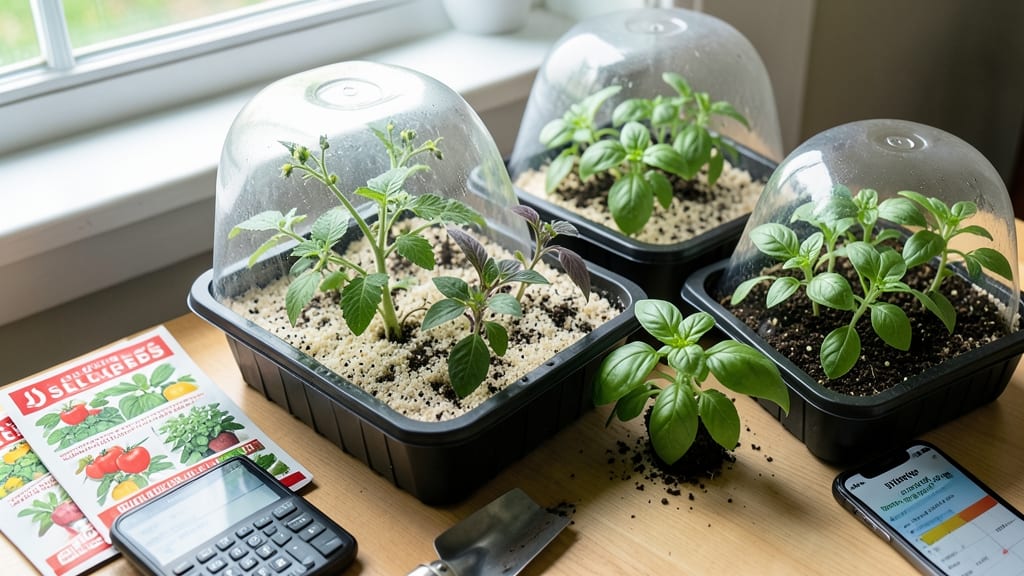
Planning your seed-starting schedule just got easier. 🌱 The Johnny's Seed Starting Calculator lets you work backward from your first frost date to pinpoint exactly when to sow Johnny seeds—whether you're growing sweet alyssum (Lobularia maritima) or other fast annuals—for vibrant blooms all season long.
First, you'll need your average last frost date for your zone, the days to maturity for your chosen variety, and the number of weeks until transplanting. The calculator handles the rest, giving you a precise start date that accounts for indoor growing conditions and outdoor hardening-off time.
No more guessing whether to start seeds too early or too late!
With the right timing, you'll see those delicate alyssum blooms appearing in just 6-8 weeks after sowing, creating a fragrant carpet of color that thrives in containers, borders, or as edging. The calculator even helps you determine how many seeds to plant per cell tray for optimal spacing.
Once you've got your dates locked in, we'll walk through setting up your seed-starting station for success—light, temperature, and moisture all dialed in to give those Johnny seeds the best possible start. Let's make this your most productive seed-starting season yet!
📚 In This Guide
- What you need
- Instructions
- Tips and common mistakes
- Wrapping up and next steps
What you need
- ● Seeds: Choose your varieties (e.g., veggies, flowers, herbs) and calculate quantities using the calculator—start with 2–3 seeds per cell for redundancy.
- ● Seed-starting trays: 72–200 cell trays (biodegradable or plastic) to match your seedling density needs.
- ● Seed-starting mix: Lightweight, sterile mix (e.g., Pro-Mix BX or coco coir)—avoid garden soil to prevent disease.
- ● Grow lights or sunny windowsill: Full-spectrum LED lights (12–16 hrs/day) or a south-facing window with 6+ hours of direct light.
- ○ Heat mat (optional but helpful): For cold starts (e.g., 70–75°F for warm-season crops like peppers).
- ● Misting bottle or spray nozzle: For gentle watering to avoid disturbing seeds.
- ● Humidity dome or plastic wrap: To retain moisture during germination (remove once sprouts appear).
- ● Thermometer/hygrometer: Monitor soil temp (ideal: 65–75°F) and humidity (70–90% for germination).
- ● Labels & markers: Permanent markers or plant label tags to track varieties and dates.
- ● Fertilizer (low-dose): Water-soluble starter fertilizer (e.g., 5-5-5 or fish emulsion)—dilute to ½ strength after true leaves appear.
- ● Seedling heaters: For precise temperature control in chilly climates.
- ● Bottom-watering trays: To encourage deep root growth and prevent overwatering.
- ● Grow tent or reflective surfaces: Maximize light efficiency in low-light spaces.
- ● pH testing kit: Ensure your mix is in the 5.8–6.2 range for optimal nutrient uptake.
- ● Growth journal: Track progress, transplant dates, and notes for future reference!
How to use Johnny's seed starting calculator for perfect timing
Here's the straightforward method I use to avoid rushed seedlings and wasted effort.
📅 Step 1: Determine Your Last Frost Date
Start by finding your average last frost date for your growing zone. Johnny's Seed Starting Calculator uses this as the foundation for all timing recommendations. If you don't know your zone, check the USDA Plant Hardiness Zone Map or use your ZIP code in the calculator.
I always verify my local extension service's records because microclimates can shift frost dates by 1-2 weeks. For example, urban areas often frost later than rural zones. Write down your confirmed date—this becomes your anchor point for all calculations.
🌱 Step 2: Select Your Target Planting Date
Enter your desired transplant date into the calculator. This should be 2-4 weeks after your last frost date to allow soil to warm and settle. For heat-loving plants like tomatoes and peppers, I wait the full 4 weeks—cold soil stunts root growth.
If you're growing cool-season crops like lettuce or spinach, you can transplant earlier. The calculator handles these variations automatically. Here's the thing—don't plant too early just to get a head start. Seedlings outgrow containers faster than you think.
☀️ Step 3: Choose Your Plant Varieties
Select the specific varieties you want to grow from Johnny's extensive database. The calculator accounts for each plant's unique days to maturity and days to transplant readiness. For example, 'Early Girl' tomatoes need 6-8 weeks indoors before transplanting, while 'Black Krim' requires 8-10 weeks.
I always cross-check the seed packet recommendations with the calculator's output. Some varieties are more sensitive to transplant shock than others. The calculator highlights these differences in its timing recommendations.
⏰ Step 4: Calculate Your Seed Starting Window
Enter your selected varieties into the calculator along with your target transplant date. It will generate a precise starting window that accounts for both germination time and optimal seedling growth. For most vegetables, this falls between 4-12 weeks before transplanting.
Pay attention to the "ideal" vs "minimum" starting dates. The calculator shows both because sometimes life gets in the way. If you must start late, focus on varieties with shorter indoor requirements like radishes or lettuce.
📝 Step 5: Adjust for Your Growing Conditions
Use the calculator's optional settings to account for your specific growing setup. If you're using grow lights instead of natural light, select the "supplemental lighting" option. The calculator adjusts the timing to prevent leggy seedlings that grow too fast under artificial light.
For containers, enter your pot size—the calculator recommends slightly earlier starting dates for smaller pots since roots get crowded faster. I've learned the hard way that 4-inch pots need seeds started 1 week earlier than 6-inch pots for the same varieties.
Tips & tricks for perfect seed starting timing
These practical strategies will help you maximize Johnny's Seed Starting Calculator for foolproof seedling success.
Microclimate Reality Check: The calculator's default frost dates might not match your exact location. I always double-check with my local extension service—urban areas can frost 1-2 weeks later than rural zones. Write down your actual last frost date as your anchor point. This small step prevents overestimating your growing season and starting too late.
Variety-Specific Timing: Not all plants follow the same rules. For example, 'Early Girl' tomatoes need 6-8 weeks indoors, while 'Black Krim' requires 8-10 weeks. The calculator handles these differences automatically, but I always cross-reference with seed packet recommendations. Some heirloom varieties are more sensitive to transplant shock, so pay extra attention to those timing windows.
Lighting Adjustments: If you're using grow lights instead of natural light, select the "supplemental lighting" option in the calculator. Artificial light can cause seedlings to grow too fast (leggy seedlings), so the calculator automatically adjusts your starting window. For containers, remember that 4-inch pots need seeds started 1 week earlier than 6-inch pots—roots get crowded faster in smaller spaces.
Backup Plan for Late Starters: The calculator shows both "ideal" and "minimum" starting dates. If life gets in the way, focus on varieties with shorter indoor requirements like radishes (3-4 weeks) or lettuce (4-5 weeks). These fast growers give you a safety net when you can't start at the ideal time.
Pro Tips for Johnny Seeds Seed Starting Calculator
- These practical strategies will help you maximize Johnny's Seed Starting Calculator for foolproof seedling success.
- Microclimate Reality Check: The calculator's default frost dates might not match your exact location.
- Variety-Specific Timing: Not all plants follow the same rules.
Frequently asked questions
How accurate is the Johnny’s Seed Starting Calculator for my specific growing zone?
The calculator uses USDA Plant Hardiness Zone data and Johnny’s proprietary seed-starting algorithms to provide 90%+ accuracy for most common vegetables. However, microclimates (e.g., urban heat islands or sheltered valleys) may require ±5–7 days of adjustment. Always cross-check with your local frost dates for precision!
Can I use this calculator for flowers or herbs, not just vegetables?
The calculator is optimized for vegetables, but you can adapt it for flowers (like marigolds or zinnias) or herbs (basil, cilantro) by inputting their days to maturity from seed. For herbs, reduce the "days to transplant" to ~3–4 weeks unless they’re heat-sensitive (e.g., parsley). Always verify seed packet guidelines!
What if I don’t have a greenhouse or grow lights? Can I still use this?
The calculator accounts for indoor seed-starting setups (e.g., sunny windowsills or basic grow lights). For window starts, add 1–2 extra weeks to account for weaker light. Use a seedling heat mat ($15–$25) to speed up germination in cool homes. Pro tip: Rotate trays daily for even light exposure!
My seedlings look leggy or weak—did I mess up the timing?
Leggy seedlings often mean too little light or overcrowding, not just timing. Double-check:
For most cool-season crops (e.g., kale, peas), aim to start 6–8 weeks before your last frost. For warm-season crops (tomatoes, peppers), the calculator’s "latest start" date ensures they’ll mature before first fall frost. Exception: Fast growers like radishes or lettuce can tolerate later starts (even 4 weeks before transplant).
Adjust future starts by delaying planting by 1–2 weeks if legginess recurs.
What’s the latest I can start seeds indoors without rushing the harvest?
Wrapping up and next steps
Ready to turn your seed-starting dreams into a thriving garden? The Johnny’s Seed Starting Calculator makes it effortless to plan for success by aligning bloom times with your zone—no guesswork required! 🌱 With the right materials, timing, and confidence, you’re all set to grow a bountiful harvest.
Your next step? Grab your seeds, set up your trays, and let the magic of backward-engineered timing work for you! Happy planting—your future garden is waiting! 🌿