
Lawn
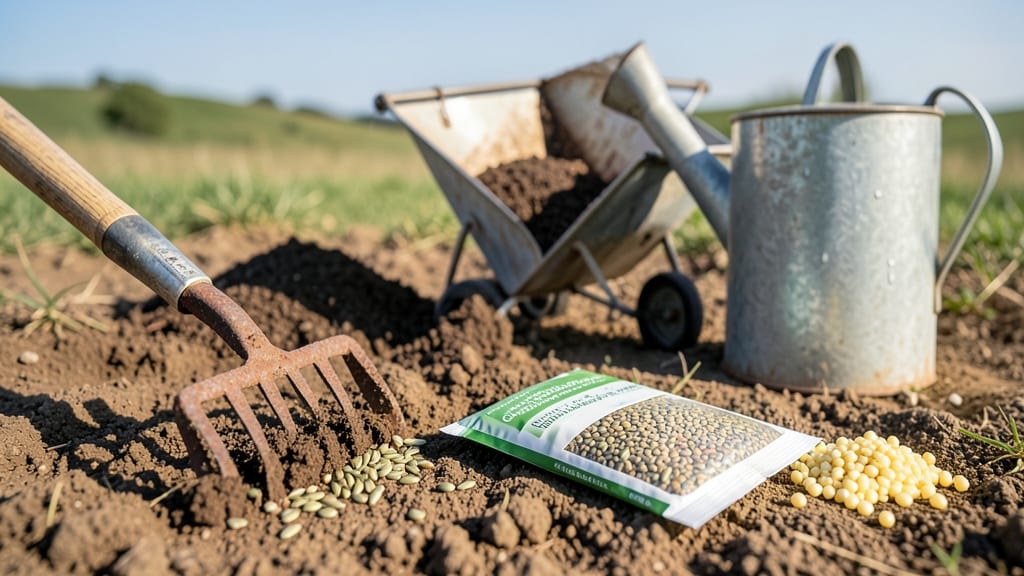
Planting grass seed on hard dirt feels impossible until you break through the compaction. 🌱 I’ve turned my own stubborn, rock-hard backyard into a lush lawn by tackling the soil first—because seeds can’t grow where roots can’t breathe.
The secret isn’t brute force; it’s science: loosening the soil, adding the right amendments, and creating the perfect seed bed.
You’ll need a few key tools: a core aerator (or even a garden fork for smaller areas), a stiff-bristle rake, compost or peat moss, and a light layer of starter fertilizer.
The process takes about 2-3 hours for a 500-square-foot lawn, but the payoff is worth it—thick grass that stays green through droughts and recovers faster from foot traffic.
Start by aerating the soil to create pockets for roots, then spread a thin layer of compost to improve texture and fertility. Rake lightly to level the surface, scatter your seed evenly, and press it into the soil just enough to ensure good contact.
Within 7-14 days, you’ll see those first tiny sprouts pushing through, proving your hard work paid off.
This method works for any grass type—cool-season or warm-season—and even revitalizes tired lawns. The key is patience: keep the soil moist (not soggy) for the first few weeks, and avoid walking on it until the grass reaches 3-4 inches tall. Your lawn will thank you for years to come.
📚 In This Guide
- What you need
- Instructions
- Tips and common mistakes
- Wrapping up and next steps
What you need
- ● Grass seed – Choose a high-quality seed blend tailored to your climate (e.g., Kentucky Bluegrass, Fescue, or Bermuda). Aim for 5–10 lbs per 1,000 sq ft, depending on seed type.
- ● Heavy-duty garden fork or broadfork – A bypass or digging fork (18–24 inches long) to break up compacted soil without damaging roots.
- ● Rake (bow or leaf rake) – A sturdy metal bow rake (8–12 teeth) for leveling and smoothing the soil after loosening.
- ● Garden hose with nozzle – A soaker nozzle or adjustable spray head for deep watering (essential for seed germination).
- ● Compost or topsoil – 2–4 inches of organic compost or screened topsoil to mix into the loosened dirt and improve fertility.
- ○ Lawn roller (optional but helpful) – A lightweight (30–50 lb) roller to press seed into the soil gently after planting.
- ● Soil aerator (spike or core) – For large areas, a manual or powered aerator can speed up loosening.
- ● Starter fertilizer – A low-nitrogen, phosphorus-rich fertilizer (e.g., 5-10-5 ratio) to boost early root growth.
- ● Mulch or straw – ¼-inch layer of straw to retain moisture and protect seeds from erosion.
- ● Knee pads or gloves – Because hard dirt + hands = unhappy hands! Opt for gardening gloves with grip.
- ● pH test kit – If your soil is extremely hard, it might be alkaline or clay-heavy. Test it to adjust with sulfur or lime if needed.
Step-by-step instructions for planting grass seed on hard dirt
Here’s how to transform tough, compacted soil into a fertile lawn bed—no heavy machinery needed.
🪴 Step 1: Loosen the Soil with a Broadfork or Aerator
Rent or borrow a broadfork, which looks like a giant pitchfork with tines spaced 4-6 inches apart. Push the tines into the soil at a 45-degree angle, about 6-8 inches deep. Pull back gently to break up the compacted layer without turning the soil over. Work in overlapping rows to cover the entire area.
If you don’t have a broadfork, a garden aerator (the rolling kind) works too—just run it over the dirt in multiple passes. The goal is to create 1-2 inch deep holes without disturbing the grass seed’s final resting spot. Skip the shovel; it’ll just compact the soil again when you press it back down.
✂️ Step 2: Remove Debris and Level the Surface
Rake out rocks, roots, and clumps of old dirt with a stiff-bristled rake. Pay special attention to low spots where water pools—these will smother your new grass. Drag a level board across the area to spot uneven sections, then fill low spots with a thin layer of topsoil (just enough to even it out).
For extra smoothness, run a lawn roller over the area after raking. This firms the surface just enough to prevent seed from sinking too deep, while still leaving room for roots to establish. You’ll know it’s right when the soil looks uniformly textured and free of large clumps.
💧 Step 3: Spread a Thin Layer of Starter Fertilizer
Use a low-nitrogen starter fertilizer (look for a 5-10-10 or 6-12-12 ratio) to give the grass a nutrient boost without burning tender seedlings. Apply it lightly with a broadcast spreader, following the package rate for new seed. Avoid granular fertilizers—they can clump and create bare spots where seed won’t make contact with soil.
Work the fertilizer into the top ¼ inch of soil with a hand rake or your fingers. This ensures it makes direct contact with the roots once the seed germinates. Skip this step if your soil test shows high phosphorus levels—too much can delay germination.
🌱 Step 4: Sow the Grass Seed Evenly
Use a drop or slit seeder for the most even coverage, or spread seed by hand if the area is small. Aim for ½ pound of seed per 100 square feet for most cool-season grasses. Walk in a crisscross pattern to avoid thick patches. Lightly press the seed into the soil with a lawn roller or your feet—just enough to cover it with a ¼ inch of dirt.
Don’t bury the seed too deep; it needs light and moisture to germinate. If you’re seeding in hot weather, water immediately after sowing to help the seed settle into the soil. For cooler conditions, wait until the next day to water—this prevents the seed from washing away.
☀️ Step 5: Water Gently and Consistently
Keep the soil evenly moist (not soggy) for the first 2-3 weeks—this is critical for germination. Water lightly 2-3 times daily (early morning is best) to keep the top ½ inch of soil damp. Use a sprinkler with fine mist settings or a gentle hose attachment to avoid displacing the seed.
Once the grass reaches 2-3 inches tall, reduce watering to 1-1½ inches per week, including rainfall. You’ll know you’re doing it right when the new grass springs up uniformly—no patchy spots. Avoid heavy foot traffic until the roots are established (about 4-6 weeks after germination).
Tips & tricks for planting grass seed on hard dirt
Between us, transforming compacted soil into a grass-friendly paradise takes more than just seed and water. Here's what nobody tells you about making it work right.
Tool Selection Matters: That broadfork isn't just a fancy pitchfork—it's your secret weapon against compaction. Rent one if you don't own it; the 4-6 inch tine spacing and 45-degree angle create perfect channels for roots without disturbing the seed bed. I've seen people try shovels and end up making things worse—they compact the soil all over again when they press it back down. Stick to the broadfork or aerator for best results.
Leveling is Non-Negotiable: You can't just eyeball this step. Drag that level board across your work area and fill every low spot with just enough topsoil to create a perfectly flat surface. Those tiny depressions where water pools will become death zones for your seedlings—no matter how much you water. Think of it like laying a foundation: if it's not level, everything else will fail. I learned this the hard way after watching grass die in sunken patches.
Seed Depth is Critical: That ¼ inch coverage isn't just a suggestion—it's the difference between germination and failure. Too deep and your seed won't get enough light; too shallow and it'll dry out. For extra insurance, especially in windy conditions, press the seed in gently with your feet or a lawn roller after sowing. This creates just enough contact pressure to keep it in place while still allowing moisture to reach it.
Watering Strategy: Those first 2-3 weeks are make-or-break for your new grass. Set a timer for your sprinkler—light applications 2-3 times daily keep the top ½ inch consistently moist without drowning the seed. I always water in the early morning so any excess has time to evaporate before nightfall. And here's a pro move: use a rain gauge to measure your watering—you'll be shocked how little actually reaches the soil with most sprinkler systems.
Pro Tips for Plant Grass Seed On Hard Dirt
- Between us, transforming compacted soil into a grass-friendly paradise takes more than just seed and water.
- Tool Selection Matters: That broadfork isn't just a fancy pitchfork—it's your secret weapon against compaction.
- Leveling is Non-Negotiable: You can't just eyeball this step.
Frequently asked questions
Got questions about tackling hard dirt and getting that grass to grow? You’re not alone! Here are answers to the most common concerns—so you can roll up your sleeves with confidence.
Can I plant grass seed directly on hard dirt without breaking it up?
While possible, it’s not ideal. Hard, compacted soil blocks water, air, and root penetration, making germination difficult. Skimping on prep could mean patchy growth or failure. For best results, loosen the top 2–4 inches—even renting a tiller for large areas can make a huge difference!
What’s the best time of year to plant grass seed on hard dirt?
Timing matters! Cool-season grasses (like Kentucky bluegrass or fescue) thrive when soil temps are 50–65°F, so aim for early spring or fall. Warm-season grasses (like Bermuda or Zoysia) need soil temps above 65°F, so plant in late spring or early summer. Avoid extreme heat or drought—your seed needs moisture to sprout!
How do I keep the seed from washing away after planting?
Erosion is a sneaky problem! After sowing, gently rake the seed into the soil (just enough to cover it lightly), then apply a thin layer of straw or peat moss to protect it. Water lightly but frequently (like a mist) to keep the soil moist—never let it dry out. A sprinkler with a fine spray works best for the first 2–3 weeks.
What if my dirt is too rocky or full of debris? Should I remove everything?
No need to dig like you’re hunting for buried treasure! Remove large rocks, roots, or trash, but leave small pebbles or debris—just rake them aside. Focus on breaking up the compacted layer. If rocks are dense, consider sanding the area with a lawn roller to help seed-to-soil contact without overworking the ground.
My grass seed isn’t growing—what could be wrong?
Don’t panic! Check these common culprits:
- Lack of moisture: Water deeply 2x/day (morning/evening) until germination.
- Too much sun/shade: Seedlings need partial shade if temps exceed 85°F.
- Poor soil contact: Rake again to ensure seed touches bare soil.
- Pests or birds: Use a lightweight netting temporarily if critters are feasting.
Wrapping up and next steps
Planting grass seed on hard dirt is totally doable—you’ve got this! 🌱 By breaking up compacted soil, amending it with organic matter, and choosing the right seed, you’re setting the stage for a thriving, green lawn.
Start small if needed, but remember: every patch of dirt has the potential to become lush grass with patience and care.
Ready to see your hard work pay off? Water consistently, monitor progress, and soon you’ll be enjoying that soft, vibrant grass underfoot! Happy planting! 🌿