
Planting
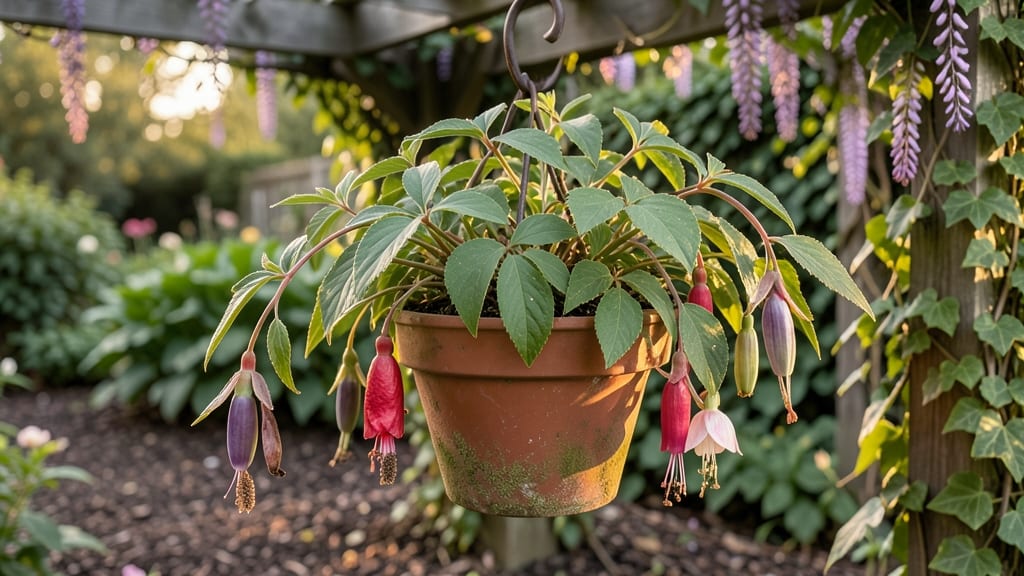
That dried fuchsia plant seed pod in your hand might hold the secret to next year’s blooms—if you know how to test its viability without twisting. 🌿 The twist test ruins seeds, but there’s a better way: gently press the pod and listen for a faint crack.
If it opens easily, those seeds are ready for planting.
Ripe pods turn from green to a papery brown, often splitting open naturally. Collect them in late summer or early fall, when they’re fully dry but haven’t scattered their seeds yet.
Store them in a paper envelope in a cool, dry place until spring—no fridge needed. This simple step saves you from wasting time on seeds that won’t sprout.
When sowing, scatter seeds on damp potting mix and barely cover them—they need light to germinate. Keep the soil consistently moist (not soggy) under a plastic dome or clear lid.
In 4-8 weeks, tiny seedlings will emerge, and you’ll know you did it right when they develop those signature fuchsia leaves.
Common mistakes? Overwatering causes mold, and impatient gardeners give up too soon—fuchsia seeds take longer to sprout than many annuals. Patience pays off with lush, vibrant plants that’ll bloom for years. Start early, and you’ll have a head start on spring’s most colorful garden stars.
📚 In This Guide
- What you need
- Instructions
- Tips and common mistakes
- Wrapping up and next steps
What you need
- ● Fuchsia seed pods: 1–5 fresh, mature pods (harvested when slightly wrinkled but not dried out).
- ● Small bowl or container: 1 shallow dish (6–8 inches wide) for soaking.
- ● Lukewarm water: Enough to cover the bottom of the bowl (~½ inch depth).
- ● Paper towels or coffee filters: 2–3 sheets (unbleached, seed-safe).
- ● Plastic wrap or ziplock bag: 1 (quart-sized) to create humidity.
- ○ Spray bottle (optional but helpful): For misting if needed.
- ● Pencil or marker: 1 (to label your setup).
- ○ Notebook or camera: To track changes over time (optional but recommended!).
- ● Seedling trays or pots: Small 2–3 inch pots with drainage holes (for transplanting later).
- ● Potting mix: Lightweight, well-draining mix (e.g., 50% peat moss + 50% perlite).
- ○ Heat mat (optional): If your space is chilly (<60°F), a seedling mat can speed up germination.
- ● Grow lights: For consistent warmth and light if natural light is limited.
How to test fuchsia seed pods for viability without twisting
Skip the guesswork—this simple method tells you exactly which fuchsia seed pods are worth saving.
🌱 Step 1: Collect and Prepare the Seed Pods
Harvest fuchsia seed pods when they turn from green to light brown and begin splitting open naturally. Use clean, sharp scissors to snip them from the plant, leaving a small stem attached. Place them in a paper bag (not plastic) and let them dry indoors for 3-5 days at room temperature (65-75°F).
This drying period is crucial—it mimics natural conditions and prevents mold. If pods feel damp when you handle them, give them an extra day or two. Once fully dry, they’ll rattle slightly when shaken, signaling they’re ready for the viability test.
💧 Step 2: Perform the Water Float Test
Fill a clear glass or bowl with room-temperature water. Gently place 10-15 dried seed pods into the water—don’t submerge them fully, just let them float. After 5 minutes, observe which pods sink and which stay afloat.
Here’s the key: sunk pods = viable seeds. The water separates empty pods (which float) from those containing healthy seeds (which sink). Discard the floaters—they won’t germinate. Keep the sunk pods in a dry, dark place for up to 2 weeks before sowing.
☀️ Step 3: Sow Viable Seeds in Moistened Soil
Fill small pots or seed trays with sterile seed-starting mix and moisten it until damp but not soggy. Scatter the viable seeds on the surface—don’t bury them, as fuchsia seeds need light to germinate. Lightly press them into the soil with your finger.
Cover the tray with a clear plastic dome or plastic wrap to retain humidity, then place it in a warm spot (70-75°F) with bright, indirect light. Check daily for moisture—mist lightly if the soil feels dry to the touch. Germination takes 14-28 days, so patience is key!
⏰ Step 4: Monitor for Germination and Thin Seedlings
Once seedlings emerge, remove the dome immediately to prevent damping-off. Fuchsia seedlings are delicate—wait until they develop 2-3 true leaves before thinning. Use small scissors to snip unwanted seedlings at soil level, leaving the strongest one per pot.
Thin too early, and you’ll stunt growth. Thin too late, and you’ll risk overcrowding. Watch for pale, leggy stems—this signals they need more light. Move them under grow lights if natural light is insufficient.
Tips & tricks for perfect fuchsia seed pod viability testing
Here's what I learned after testing dozens of seed pods—these simple tricks ensure you don't waste time on empty pods.
Drying is Everything: Those 3-5 days of drying at 65-75°F aren't just arbitrary—they're crucial for preventing mold while ensuring the pods are truly dry. I've seen pods that felt dry but still had moisture inside, so shake them gently before testing. If they rattle, they're ready. If not, give them another day. The slight rattling sound is your green light to proceed.
Water Temperature Matters: Room-temperature water is key—cold water can shock the pods and give false results. I learned this the hard way when I used water straight from the fridge and got inconsistent sinking. Also, use a clear container so you can see the pods clearly without disturbing them during the 5-minute test.
Pod Selection Strategy: Don't just grab pods randomly—look for ones that are fully light brown and starting to split naturally. Green pods or those still tightly closed rarely contain viable seeds. I've found that pods with visible cracks along the seams are the most reliable for the float test.
Storage Wisdom: After separating viable pods, store them in a dry, dark place for up to 2 weeks. I use small paper envelopes with the date written on them. The darkness prevents premature germination, while the dry conditions maintain viability. Don't use plastic bags—condensation can ruin your seeds.
Pro Tips for Fuchsia Plant Seed Pods
- Here's what I learned after testing dozens of seed pods—these simple tricks ensure you don't waste time on empty pods.
- Drying is Everything: Those 3-5 days of drying at 65-75°F aren't just arbitrary—they're crucial for preventing mold while ensuring the pods are truly dry.
- Water Temperature Matters: Room-temperature water is key—cold water can shock the pods and give false results.
Frequently asked questions
Got questions about fuchsia seed pods and germination? You’re not alone! Here are answers to the most common queries—from timing to troubleshooting—so you can grow fuchsias with confidence.
How do I know when fuchsia seed pods are ready to harvest?
Fuchsia seed pods are ripe when they turn dry, papery, and slightly wrinkled—usually 4–6 weeks after flowering. Gently twist or snip them off (avoid crushing!) and let them dry completely before opening. Pro tip: Harvest on a dry day to prevent mold.
How long does it take for fuchsia seeds to germinate?
Germination typically takes 14–30 days in warm, moist conditions (70–75°F). For faster results, soak seeds in warm water for 24 hours before planting. Patience is key—some seeds may take longer, especially if stored improperly.
Can I grow fuchsias from seed pods in cold climates?
Yes! Start seeds indoors 8–10 weeks before your last frost using a heat mat (70–75°F) to speed germination. Transplant seedlings outdoors only after nighttime temps stay above 50°F. Hardier varieties like Fuchsia magellanica tolerate cooler weather better.
What if my fuchsia seeds won’t sprout—what’s the fix?
Try these troubleshooting steps:
- Check moisture: Keep soil consistently damp (not soggy) with a humidity dome.
- Test viability: Cut open a seed pod—fresh seeds should be plump and dark.
- Adjust light: Use a grow light if seedlings are leggy (they need 12+ hours of light/day).
- Cuttings: Snip 3–4 inch stems (just below a leaf node), dip in rooting hormone, and plant in perlite/sand mix. Roots form in 3–6 weeks!
- Layering: Bend a low branch to the ground, cover with soil, and wait for roots to develop (great for established plants).
- Buy seedlings: Nurseries often sell young fuchsias—ideal for impatient gardeners!
Fungal issues? Switch to sterile potting mix and avoid overwatering.
If all else fails, try a new batch of seeds!Are there alternatives to growing from seed pods?
Propagate fuchsias from:
Wrapping up and next steps
Growing fuchsias from seed pods is a rewarding adventure that combines patience with the joy of nurturing life! By mastering the twist-free viability test, you’ve unlocked a simple way to predict germination success—no guesswork required.
Whether you’re a seasoned gardener or just starting, this method empowers you to grow with confidence and turn tiny pods into vibrant blooms.
Ready to take the next step? Grab those seed pods, follow your tested method, and watch your garden flourish! 🌱 Share your progress—we’d love to see your fuchsia journey unfold!