
Lawn
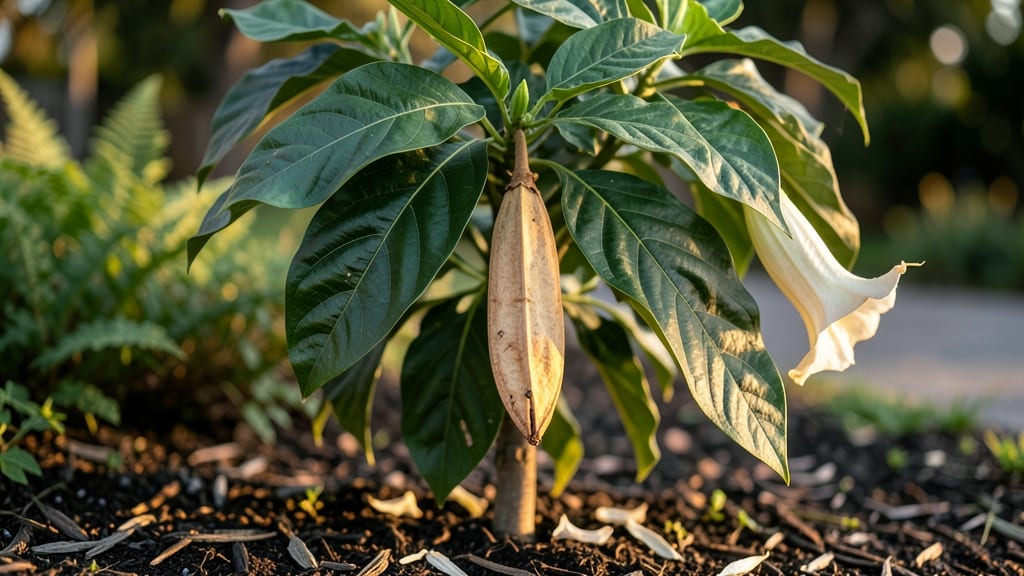
Harvesting devil's trumpet seed pods turns a messy garden cleanup into a foolproof way to grow these dramatic plants year after year. 🌿 The key is timing—wait until the pods split open naturally, revealing the seeds inside, which can be stored dry until planting season.
I’ve saved seeds from my Brugmansia for three seasons now, and the trickiest part isn’t the pods themselves but knowing when they’re ready.
You’ll need just a few simple supplies: gloves (the pods can be sticky!), a bowl for collecting seeds, and a paper bag for drying them.
Once the pods crack open, scoop out the seeds—don’t wash them—and spread them out on a tray to dry completely before storing in an envelope. These seeds stay viable for up to two years if kept cool and dry, so you’re never stuck without plants again.
Germinating them is where the magic happens. Plant the seeds in a light, airy mix of peat and perlite, barely covering them, and keep the soil warm and moist. Within 2-4 weeks, you’ll see tiny seedlings pushing through—just like the lush, fragrant plants you’re growing now.
The real reward? Seedlings that mature into those iconic, bell-shaped flowers with their intoxicating nighttime fragrance.
Watch out for overwatering, which can rot the seeds, and keep them in bright, indirect light until they’re strong enough to transplant. Once they’ve got a few sets of leaves, you can move them outside—but wait until all frost risk has passed in your zone.
With these seeds, you’ll have a fresh batch of devil’s trumpets every year without buying new plants.
📚 In This Guide
- What you need
- Instructions
- Tips and common mistakes
- Wrapping up and next steps
What you need
- ● Mature devil’s trumpet plants (ensure pods are fully developed and dry—typically late summer to early fall)
- ● Pruning shears or sharp scissors (sterilized to prevent disease spread)
- ● Brown paper bags or breathable mesh sacks (2–3 medium-sized bags for collecting pods)
- ● Labeling tags & permanent marker (to track varieties and harvest dates)
- ○ Glove (optional but recommended)—some gardeners prefer lightweight gardening gloves for protection
- ● Drying rack or clean, dry surface (elevated and well-ventilated, like a screen or wire rack)
- ● Paper towels or silica gel packets (for moisture control during drying)
- ● Small, airtight containers (e.g., glass jars or resealable bags with desiccant packets for long-term storage)
- ● Humidity monitor (to ensure pods dry at 30–40% humidity)
- ● Fan or dehumidifier (for faster drying in humid climates)
- ● Seed viability test kit (to check germination rates post-harvest)
- ● Notebook or seed-saving journal (to log plant traits, yield, and storage conditions)
Step-by-step guide to harvesting devil's trumpet seed pods
Here's how to collect seeds without stress—even when pods are stubborn.
🌿 Step 1: Identify and Wait for Full Maturity
Devil's trumpet pods turn from green to tan or light brown when fully mature—this is your cue. I always check pods when they're dry to the touch but still intact. If you harvest too early, seeds won't be viable, and the pods may crack open naturally, scattering seeds everywhere.
Look for pods that feel paper-thin and brittle when gently squeezed. The best time is usually in late fall or early winter, depending on your climate. Avoid harvesting after the first frost—cold temperatures can reduce seed viability.
✂️ Step 2: Harvest and Prepare for Drying
Use clean, sharp pruning shears to snip pods directly from the stem, leaving about ½ inch of stem attached. This helps prevent moisture loss during drying. Place pods in a single layer on a paper towel-lined tray—crowding causes rot or mold.
I like to work in a well-ventilated area with indirect sunlight (no direct sun, which can overheat and damage seeds). If humidity is high, prop a small fan nearby to circulate air. Drying takes 1-2 weeks, depending on your climate.
🪴 Step 3: Extract Seeds and Store Properly
Once pods are completely dry and brittle, gently crush them by hand over a clean sheet of paper. Devil's trumpet seeds are large and easy to spot—they look like small, dark brown beans. Remove any debris or chaff by hand or with a fine mesh strainer.
Store seeds in a paper envelope or airtight container with a silica gel packet to absorb moisture. Label with the harvest date—these seeds stay viable for 2-3 years if stored in a cool, dark place (like a pantry or seed fridge).
⏰ Step 4: Test Viability Before Planting
Before sowing, test a few seeds by placing them in a small container of water. Viable seeds will sink to the bottom within 15 minutes—discard any that float. For extra assurance, plant a few seeds in potting mix and check for germination in 2-4 weeks at 70-75°F.
If germination is slow, try soaking seeds overnight in lukewarm water before planting. Devil's trumpet seeds can be finicky, so patience pays off. Once you confirm viability, you're ready to propagate your own plants year after year.
Tips & tricks for perfect devil's trumpet seed pod harvesting
Here's what nobody tells you about making this process foolproof—no more wasted seeds or guesswork.
Timing Secret: The 15-minute water test for viability is your best friend. I learned this the hard way after planting dozens of questionable seeds. If you're unsure about a batch, always test a few seeds first—it only takes minutes and saves hours of frustration later. Trust me, skipping this step means risking a garden full of nothing but dirt.
Drying Strategy: When drying your pods, don't rush the 1-2 week process—especially if humidity is high. I once tried speeding this up with a dehydrator and ended up with moldy pods. Instead, place a small fan nearby to create gentle airflow. If your climate is particularly damp, consider using a food dehydrator on low heat (below 95°F) for 6-8 hours daily until completely dry.
Storage Wisdom: That 2-3 year viability window is only accurate if you store seeds properly. I've had batches last 4 years when stored in a vacuum-sealed bag with a silica packet, but standard airtight containers work too. The key is absolute darkness and consistent cool temperatures—never store near windows or appliances that generate heat. Labeling with the harvest date is non-negotiable; you'll thank yourself next planting season.
Germination Hack: For that 70-75°F germination range, I've found a simple way to create ideal conditions without a heat mat. Place your potted seeds on top of your refrigerator—most fridges maintain around 70°F at the top. This works perfectly and eliminates the need for additional equipment. If germination is still slow after 2 weeks, try the overnight soak in lukewarm water—this mimics natural rainfall and often triggers stubborn seeds.
Pro Tips for Devil'S Trumpet Seed Pod
- Here's what nobody tells you about making this process foolproof—no more wasted seeds or guesswork.
- Timing Secret: The 15-minute water test for viability is your best friend.
- Drying Strategy: When drying your pods, don't rush the 1-2 week process—especially if humidity is high.
Frequently asked questions
Got questions about harvesting devil's trumpet seed pods?
You’re not alone! Here are some of the most common queries—plus quick, actionable answers to keep your seed-saving game on point.
When is the best time to harvest devil’s trumpet seed pods?
The ideal window is late fall to early winter (after the first frost but before heavy rains). This ensures pods are fully mature but haven’t split open or rotted. Look for dry, papery pods that rattle when shaken—that’s your cue! Harvest before birds or squirrels beat you to them!
How do I know if the seed pods are ready for saving?
Ready pods should be completely dry, brown, and slightly brittle. Gently squeeze one—if it cracks easily and releases seeds, it’s harvest time. Avoid green or moist pods, as they won’t store well. Pro tip: Cut pods with scissors (not pulled) to avoid damaging the plant.
Can I harvest devil’s trumpet seed pods from my yard if it’s near a highway?
Use caution! If your plant is near high-traffic roads or industrial areas, seeds may carry heavy metal contamination. For safe seed saving, relocate the plant at least 50 feet from roads or source seeds from a trusted organic grower. When in doubt, test soil quality before using seeds for propagation.
What’s the best way to store devil’s trumpet seeds long-term?
Store seeds in a cool (35–40°F), dry place (like a fridge or seed vault) inside paper envelopes or glass jars. Add a silica gel packet to absorb moisture. Label with the harvest date—most devil’s trumpet seeds stay viable for 2–3 years if stored properly. Freeze-drying is another pro method for extra longevity!
Why did my devil’s trumpet pods split open before I could harvest them?
This usually happens if pods were overripe or exposed to humidity. Next time, harvest earlier (when pods are firm but starting to brown) or cover plants with breathable mesh to deter wildlife. If pods already split, collect seeds immediately—they’ll dry fast on a paper towel before storing!
Are there alternatives to devil’s trumpet for seed saving?
Yes! Try datura (Jimsonweed), angel’s trumpet, or moonflower—all in the same family (Solanaceae) and great for seed saving. For a safer, non-toxic option, consider passionflower or morning glory. Just remember: always research toxicity before handling or planting seeds!
Wrapping up and next steps
The devil’s trumpet seed pod offers a fascinating way to extend your seed-saving game year-round—without the stress! By mastering simple harvesting techniques and storage tips, you can preserve viability and unlock a sustainable garden resource.
Whether you’re a seasoned gardener or just starting out, these methods make seed saving effortless and rewarding.
Ready to take the next step? Try harvesting a few pods today and experiment with storage methods to see what works best in your climate. Share your success (or tips!) with fellow gardeners—every seed saved is a victory for your green thumb! 🌱✨