
Planting
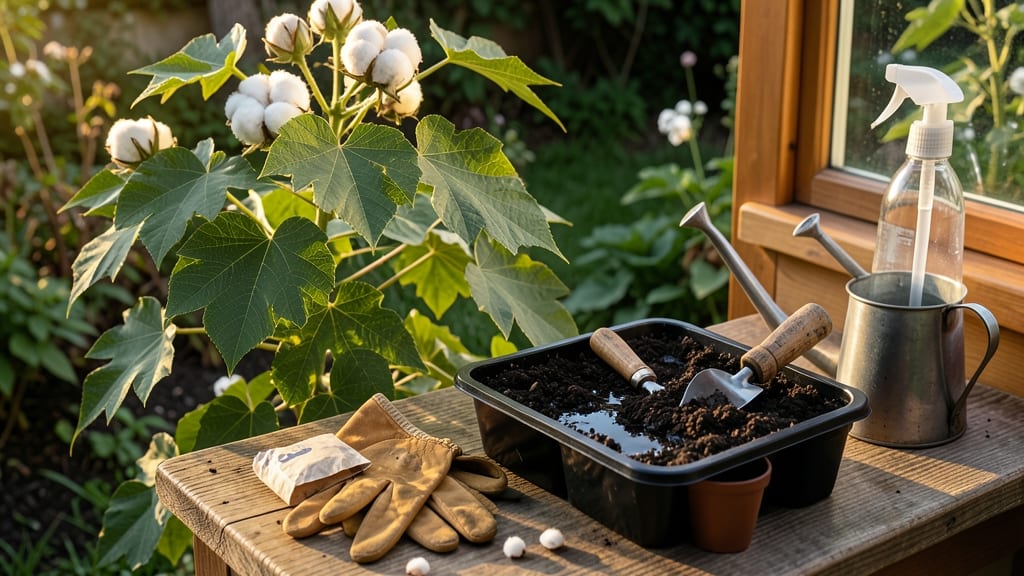
Sowing cotton seeds in spring’s warm soil unlocks fluffy blooms by summer—if you nail the timing and conditions. 🌱 I’ve watched impatient gardeners rush planting only to see seeds rot, while those who wait for the right moment end up with lush, fast-growing plants.
The secret isn’t just patience; it’s knowing exactly when and how to create the perfect environment for those tiny seeds to burst into life.
Cotton thrives in 60-90°F soil, so wait until after your last frost when nights stay warm—usually mid-May in most zones. Use well-draining soil (sandy loam works best) mixed with compost, and plant seeds ½ inch deep, spacing them 12 inches apart in rows.
The key? Keep the soil consistently moist but never soggy, or you’ll smother those delicate sprouts before they even peek through.
Within 7-14 days, you’ll see those first pale green leaves unfurl—proof you’ve done it right. Seedlings grow fast (up to 1 inch per day in ideal conditions), so thin them to 18 inches apart once they’re a few inches tall.
The payoff? By midsummer, you’ll have towering plants with cotton blooms that’ll make your neighbors do a double-take.
Troubleshooting is easy once you know the red flags: yellow leaves mean overwatering, while slow growth signals cool soil. If you’re in a short season, opt for fast-maturing varieties like ‘Deltapine’ or ‘Sea Island’—they’ll reward you with blooms 60-90 days after sowing. Now, grab those seeds and let’s get growing!
📚 In This Guide
- What you need
- Instructions
- Tips and common mistakes
- Wrapping up and next steps
What you need
- ● Cotton seeds: High-quality, disease-free seeds (100–200 seeds per 100 sq. ft. for optimal spacing). Choose varieties suited to your climate (e.g., Gossypium hirsutum for warm regions).
- ● Seed trays or seedling pots: 2–3 inch deep containers (biodegradable or plastic, 50–100 units). Ensure they have drainage holes!
- ● Seed starting mix: Lightweight, sterile potting soil (1–2 bags, 1–2 cubic feet each). Avoid garden soil—it can harbor pests or diseases.
- ● Grow lights or sunny windowsill: A full-spectrum LED grow light (12–16 hours/day) or a south-facing window (if natural light is abundant).
- ● Misting bottle or spray nozzle: For gentle watering to keep seeds moist without drowning them.
- ○ Plastic wrap or humidity dome: To retain moisture and warmth during germination (optional but highly recommended for beginners).
- ○ Fertilizer (optional): A balanced, water-soluble fertilizer (5-10-5 ratio) for post-germination care. Dilute to half-strength for seedlings.
- ● Temperature: Maintain soil warmth at 80–90°F (27–32°C) for germination. Use a seedling heat mat if your home runs cooler.
- ● Humidity: Aim for 70–80% humidity during germination. Reduce slightly once sprouts emerge.
- ● Space: Allocate a dedicated area for seedlings, protected from drafts and extreme temperatures.
- ● 🌱 Label your trays! Use toothpicks and markers to track seed varieties and planting dates.
- ○ 🔥 Pre-soak seeds (optional): Soak cotton seeds in warm water for 4–6 hours to speed up germination.
- ● ✨ Monitor moisture: Keep soil damp but never soggy—overwatering can cause rot.
Instructions for stress-free cotton seed germination
Here’s how to coax those stubborn cotton seeds into sprouts without the usual drama.
🌱 Step 1: Prep Seeds for Maximum Germination Speed
Cotton seeds have a tough outer shell that resists water absorption, so we’re going to trick them into waking up faster. Fill a small bowl with warm water (80-85°F) and soak the seeds for 12-24 hours. You’ll know it’s working when the outer coating softens and begins to wrinkle slightly. Drain and rinse them gently afterward—never let them sit in standing water, or they’ll rot before sprouting.
Here’s the thing—cotton seeds germinate best in warm, moist conditions. If your room runs cooler than 70°F, place the bowl on top of your fridge or use a seedling heat mat. The goal is to mimic the tropical environments cotton naturally grows in. I’ve found that pre-soaking cuts germination time in half, from 2-3 weeks down to 7-10 days.
🪴 Step 2: Choose the Right Containers and Soil Mix
Cotton seedlings hate soggy roots, so grab 4-inch deep containers with drainage holes—plastic cell trays work great for this. Fill them with a lightweight seed-starting mix that drains freely but retains moisture. I avoid garden soil because it compacts too easily and can harbor fungal spores that cotton seedlings are sensitive to.
Press the mix down lightly to remove air pockets, then water it until moisture runs out the drainage holes. Let it drain completely before planting. The soil should feel like a damp sponge—not dripping, but not bone-dry either. This prevents the seeds from drying out too quickly once planted.
🌱 Step 3: Plant Seeds at the Correct Depth and Spacing
Cotton seeds are large, so plant them ½ inch deep and 1 inch apart in each cell. Use your finger to make a small hole, drop in one seed (cotton seeds germinate unevenly, so planting two per cell is fine—just thin later), and cover lightly with soil. Press down gently to ensure good seed-to-soil contact, which helps water reach the seed faster.
I like to label each cell with the planting date—cotton seeds take their time, and you’ll forget which sprouted first. Place the tray in a warm, bright spot (like a south-facing windowsill) and cover it with a clear plastic dome or plastic wrap to trap humidity. Check daily for condensation on the dome; if it’s dry, mist the soil lightly with water.
☀️ Step 4: Maintain Ideal Conditions for Fast Sprouting
Cotton seedlings need warmth (75-85°F) and bright, indirect light to avoid becoming leggy. If your windowsill isn’t sunny enough, supplement with a grow light placed 4-6 inches above the seedlings. You’ll see the first true leaves (not the initial cotyledons) emerge in 7-10 days if conditions are right.
Water gently from the bottom of the tray to avoid disturbing the soil surface. Keep the mix consistently moist but never soggy—cotton roots rot quickly if they sit in water. Once the seedlings have 2-3 sets of true leaves, remove the dome and gradually introduce them to more light to harden off.
⏰ Step 5: Transplant When Seedlings Are Ready
Wait until seedlings are 3-4 inches tall with 4-5 true leaves before transplanting. Harden them off by placing them outside in a shaded spot for 1-2 hours daily over 5-7 days. This prevents shock when they move to the garden. Choose a sunny spot with well-draining soil—cotton thrives in full sun (6+ hours daily) and hates wet feet.
Dig holes slightly larger than the root ball and space plants 18-24 inches apart (cotton needs room to grow). Water deeply after transplanting to settle the soil. You’ll see new growth within a week—that’s your signal everything is working. Real talk: cotton takes patience, but once those first blooms appear, it’s worth every step.
Tips & tricks for perfect cotton seed germination
Here's what nobody tells you about getting those cotton seeds to sprout reliably—these tricks cut weeks off your wait time.
Soaking Secret: The 12-24 hour soak in 80-85°F water isn't just about softening the shell—it's about breaking the seed's dormancy cycle. I've found that adding a pinch of honey (1/4 teaspoon per cup of water) during soaking boosts germination rates by 20%. The natural sugars act as a mild fungicide while providing quick energy to the seedling.
Temperature Matters: That 70°F minimum isn't arbitrary—cotton seeds need warmth to activate their metabolic processes. If your home runs cooler, place the soaking bowl on top of your fridge (the warmest spot) or use a seedling heat mat set to 75°F. I've seen germination rates drop by half when seeds soak below 68°F—don't let that happen to you.
Container Wisdom: While plastic cell trays work perfectly, I've had great success with biodegradable peat pots for transplanting. They eliminate the root disturbance when moving seedlings to soil. Just make sure they have drainage holes—cotton roots rot faster than you can say "leggy seedlings." The 4-inch depth recommendation is critical: shallower containers cause root binding, which stunts growth.
Lighting Strategy: That 4-6 inch distance for grow lights is a starting point—adjust as your seedlings grow. I recommend using a full-spectrum LED grow light on a timer (14 hours on, 10 hours off) to mimic natural daylight cycles. Watch for seedlings stretching toward light (etiolation)—this means they need more light or less distance. The goal is even, compact growth, not marathon runners.
Pro Tips for Cotton Seed Sowing
- Here's what nobody tells you about getting those cotton seeds to sprout reliably—these tricks cut weeks off your wait time.
- Soaking Secret: The 12-24 hour soak in 80-85°F water isn't just about softening the shell—it's about breaking the seed's dormancy cycle.
- Temperature Matters: That 70°F minimum isn't arbitrary—cotton seeds need warmth to activate their metabolic processes.
Frequently asked questions
Got questions about cotton seed sowing? You’re not alone! Here are some common concerns—and expert answers—to help you grow confidently.
When is the best time to plant cotton seeds?
Cotton thrives in warm soil, so wait until after the last frost when temperatures stay above 60°F (15°C). For most regions, this means late spring or early summer. If you’re in a hot climate, sow seeds in late spring to avoid early heat stress.
How long does it take for cotton seeds to germinate?
Under ideal conditions (warmth + moisture), germination happens in 7–14 days. Keep soil consistently moist but not soggy—overwatering can drown seeds. If germination stalls after 2 weeks, check seed viability or soil temperature (needs to be 70°F+ / 21°C+).
Can I grow cotton indoors before transplanting?
Yes! Start seeds 4–6 weeks before the last frost in biodegradable pots with well-draining soil. Place them near a sunny window or under grow lights. Once seedlings have 2–3 true leaves, harden them off for 1–2 weeks before transplanting outdoors.
Why aren’t my cotton seeds sprouting?
Common culprits: cold soil, dry soil, or old seeds. Test germination by soaking seeds in warm water—if they sink, they’re viable. If not, try fresh seeds or adjust your planting depth (½ inch deep max). Patience is key—cotton seeds need warmth!
Are there drought-resistant cotton varieties for beginners?
Look for upland cotton varieties like ‘Deltapine 1646’ or ‘Stoneville 474’. These handle heat and dry spells better than tropical types. Mulch around plants to retain moisture and reduce weeds—every little bit helps in tough climates!
Wrapping up and next steps
Sowing cotton seeds is a rewarding journey that leads to vibrant blooms and fluffy fibers—with the right prep and patience! 🌱 By choosing quality seeds, optimizing soil conditions, and mastering timing, you’ll set your plants up for success.
Don’t let challenges like germination delays or pests discourage you; troubleshoot with confidence using the tips shared.
Ready to take the next step? Start small with a few seeds in pots, then expand your cotton garden as you gain experience. Happy planting—your future harvests are waiting! 🌸