
Planting
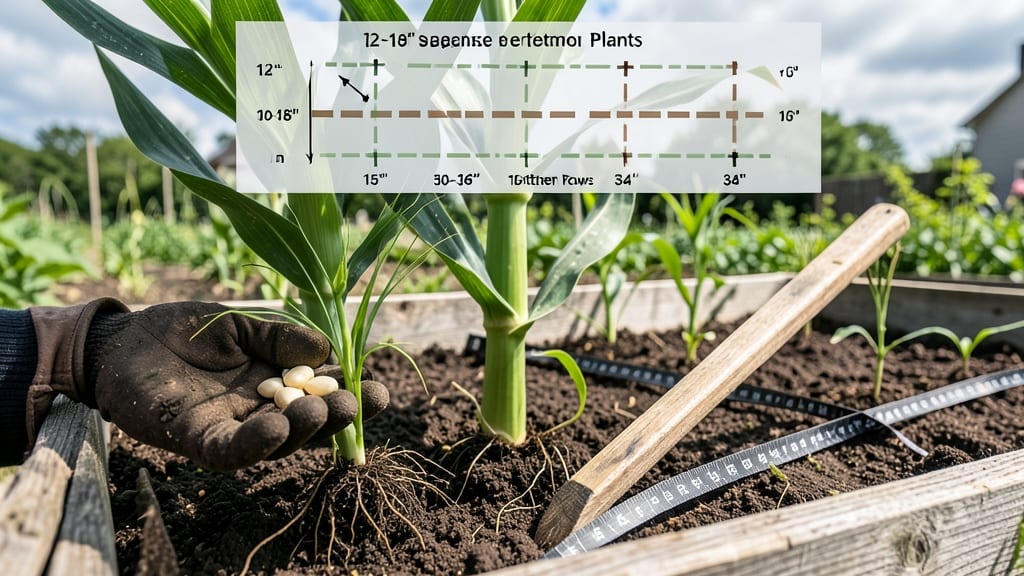
Perfect corn seed spacing turns a handful of seeds into a towering, productive stalk. 🌽 My first corn crop failed because I crammed seeds too close—now I know the exact 3-inch spacing between plants and 3-foot rows that guarantee strong stalks with fewer pests.
The science is simple: give roots room to breathe, and the plants will reward you with ears heavy enough to feed a family. You’ll need a sunny spot with rich soil, a rake for leveling rows, and patience for the 60-90 days until harvest.
The key is consistency: mark your rows with sticks or string, then plant seeds 1 inch deep and 3 inches apart in hills spaced 3 feet apart. This spacing prevents crowding, reduces disease, and lets each stalk reach its full potential.
By late summer, you’ll be harvesting 12-18 inches of cob per stalk—double what you’d get from overcrowded rows. The ears will be plump, the kernels plentiful, and the taste sweeter than store-bought. This method works for sweet corn, dent corn, or even heirloom varieties.
For larger gardens, double the rows to 6 feet apart—just keep the same plant spacing. And if you’re short on space, try hill planting with 4-5 seeds per mound. Now grab your seeds and let’s get those rows straight!
📚 In This Guide
- What you need
- Instructions
- Tips and common mistakes
- Wrapping up and next steps
What you need
- ● Corn seeds: High-quality, non-GMO seeds (e.g., Zea mays)—1.5–2 lbs per acre (adjust based on variety and spacing).
- ● Seed planter or drill: Precision planter for even spacing (e.g., John Deere MaxEmerge or Great Plains models).
- ● Soil tester kit: To check pH (ideal: 6.0–6.8) and nutrient levels (phosphorus, potassium, nitrogen).
- ● Fertilizer: Balanced 10-10-10 or 12-12-12 (apply pre-planting or at planting).
- ● Tape measure or spacing wheel: For marking rows and ensuring 15–36 inches between plants (varies by variety).
- ● Water source: Hose, sprinkler, or irrigation system (corn needs 1–1.5 inches of water per week).
- ● Gloves & knee pads: For comfortable planting (especially for large plots!).
- ● Seed treatment: Fungicide or insecticide coating to protect young seedlings.
- ● Row markers or flags: Stakes or colored flags to mark planting lines (great for beginners!).
- ● Soil conditioner: Compost or organic matter to improve drainage and fertility.
- ● Weed barrier cloth: To suppress weeds in early growth stages.
- ● GPS-guided planter (for large farms): For ultra-precise spacing and efficiency.
How to space corn seeds for bountiful harvests
Perfect spacing is the secret to tall, sturdy stalks and heavy ears. Here's how I get the most out of every seed.
🌱 Step 1: Plan Your Row Layout and Soil Prep
Corn thrives in blocks rather than single rows—this helps pollination and prevents wind damage. For 4 plants, arrange them in a 2x2 grid with rows 30 inches apart. Clear the area of weeds first, then loosen the soil to a depth of 12 inches with a garden fork.
Corn loves rich, well-draining soil with a pH between 6.0 and 6.8. Work in a 2-inch layer of compost before planting. You'll see the difference in stalk strength and ear size later—healthy soil means fewer pests and better yields. I always test my soil first; you can grab a kit at any garden center for $15.
🌱 Step 2: Plant Seeds at the Right Depth and Spacing
Drop 1-2 seeds per hill at a depth of 1.5 inches—deeper planting slows germination. Space hills 12 inches apart within the row. I use a small wooden stake to mark each hill so I don't accidentally plant too close.
Corn roots need room to spread, so don't crowd them. If you plant 2 seeds per hill, thin to the strongest seedling after germination. You'll know it's time to thin when the first true leaves appear—usually 7-10 days after planting. Gently pull the weaker seedling, leaving the stronger one to grow.
☀️ Step 3: Water and Maintain Even Moisture
Keep the soil consistently moist but never soggy for the first 2 weeks. Water deeply 1 inch per week, aiming for the base of the plants rather than overhead. Corn roots go deep, so they need steady moisture to establish properly.
You'll see the first sprouts emerge in 7-14 days, depending on your climate. Once they reach 6 inches tall, increase water to 1.5 inches per week. Mulch around the base with 2 inches of straw to retain moisture and suppress weeds. This keeps the soil cool and prevents crusting that can choke young plants.
✂️ Step 4: Monitor Growth and Adjust Spacing if Needed
Corn grows fast, and proper spacing prevents competition. If your plants start leaning toward each other as they grow taller, it's time to thin again. Aim for 12-14 inches between stalks at maturity—this ensures good air circulation and reduces disease risk.
Watch for tassels (the pollen-producing stalks) appearing at the top of the plants. This happens around 60 days after planting, depending on the variety. If you planted in a block, you'll see the tassels swaying together, which helps with cross-pollination. If you notice any stalks with yellowing leaves or stunted growth, they're competing for space—remove them immediately.
🌿 Step 5: Support Strong Stalks for Heavy Ears
Corn needs strong stalks to support the weight of those big ears. If your plants are 5 feet tall or taller, consider staking the tallest ones for extra support. Use 3-foot bamboo stakes tied loosely to the stalk with soft twine—tight ties can damage the plant as it grows.
You'll know your corn is ready to harvest when the silks turn brown and the kernels feel plump when pressed. This usually happens 20-25 days after tasseling. Cut the stalk at the base with a sharp knife or pruners, leaving a 1-inch stem attached to the ear. The right spacing ensures each ear gets enough nutrients to fill out properly—no more sad, half-empty cobs!
Tips & tricks for perfect corn seed spacing
A few small adjustments can make all the difference between scraggly stalks and a garden full of plump, sweet ears.
Block Planting Pays Off: The 2x2 grid layout in Step 1 isn't just about looks—it's about pollination. Corn is wind-pollinated, and planting in blocks creates a "cloud" of tassels that dance together in the breeze. This cross-pollination ensures every plant gets fertilized, even in light winds. I've seen gardens where single rows produced half-empty ears because the pollen couldn't travel far enough.
Mark Those Hills: That wooden stake trick in Step 2 is a game-changer, especially for beginners. Use popsicle sticks if you don't have wooden stakes—they're just as effective. Marking each hill prevents overcrowding as plants grow. I once planted without markers and ended up with 8-inch spacing instead of 12, which led to weak stalks and poor ear development. Trust me, 5 minutes of marking now saves hours of thinning later.
Thinning Timing is Critical: The 7-10 day window for thinning in Step 2 is when those first true leaves appear. This is your cue to act—don't wait until plants are taller. Young seedlings have shallow roots, so they pull out easily without disturbing the stronger plant's root system. If you wait until plants are 6 inches tall, you risk damaging both plants when you thin.
Watering Wisdom: That 1.5 inches per week measurement in Step 3 is a guideline, but timing matters too. Water in the morning so leaves dry quickly, preventing fungal diseases. I set a rain gauge near my corn patch—it's amazing how much water actually falls during storms. If you get 1 inch of rain, you can cut back on your watering that week. Just remember, corn roots go deep, so water deeply rather than frequently.
Pro Tips for Corn Seed Spacing
- A few small adjustments can make all the difference between scraggly stalks and a garden full of plump, sweet ears.
- Block Planting Pays Off: The 2x2 grid layout in Step 1 isn't just about looks—it's about pollination.
- Mark Those Hills: That wooden stake trick in Step 2 is a game-changer, especially for beginners.
Frequently asked questions
Got questions about optimizing your corn seed spacing? You’re not alone! Here are answers to the most common concerns—so you can plant with confidence and reap the rewards.
What’s the ideal corn seed spacing for high yields?
The sweet spot is typically 12–18 inches apart in rows spaced 30–36 inches apart, depending on your corn variety and soil fertility. Dwarf or bush varieties can handle closer spacing (6–12 inches), while tall, indeterminate types thrive with wider gaps. Always check your seed packet for variety-specific recommendations!
Can I plant corn seeds too close together?
Overcrowding leads to stunted growth, poor ear development, and increased disease risk—like corn plants competing for sunlight and nutrients. If you’ve already planted too close, thin seedlings to the recommended spacing once they’re 4–6 inches tall. Pro tip: Use a string line for even spacing when thinning!
Does corn seed spacing change based on soil type?
Yes! In heavy clay or compacted soil, widen row spacing to 36–48 inches to reduce competition and improve drainage. For sandy or loose soil, tighter rows (30 inches) can work well since roots anchor better. Always loosen soil before planting to encourage deeper root growth.
What’s the best time to adjust corn seed spacing if I’ve already planted?
Thin seedlings as soon as they’re 4–6 inches tall and have 2–3 leaves (usually 3–4 weeks after germination). Wait too long, and you’ll risk damaging roots or stunting growth. If using a precision planter, adjust spacing during planting for consistency.
Are there alternatives to traditional corn seed spacing?
Try square foot gardening (1 plant per square foot) for small plots or hill planting (3–4 seeds per mound, spaced 3 feet apart). For organic farms, some growers use intercropping (planting beans or squash between rows) to maximize space and reduce pests. Experiment to find what works for your setup!
Why do my corn plants look healthy but have no ears?
This often happens when plants are overcrowded or underfed. Check your spacing—if rows are too tight, thin immediately. Also, ensure adequate nitrogen (early growth) and potassium (ear development). Poor pollination (due to too few tassels) can also cause bare stalks. Hand-pollinate if needed!
Wrapping up and next steps
Mastering corn seed spacing isn’t just about guesswork—it’s a science-backed strategy to unlock your field’s full potential! 🌽 By following the right row spacing (15–36 inches) and in-row spacing (6–12 inches), you’ll boost yields, reduce competition, and save time on thinning.
Whether you’re a seasoned farmer or a curious gardener, these principles work for any scale.
Ready to plant with confidence? Start small—test a few rows with your ideal spacing, track results, and refine as you go. Soon, you’ll be reaping the rewards of perfectly spaced corn and sharing your green-thumb wisdom with others! 🌱