
Lawn
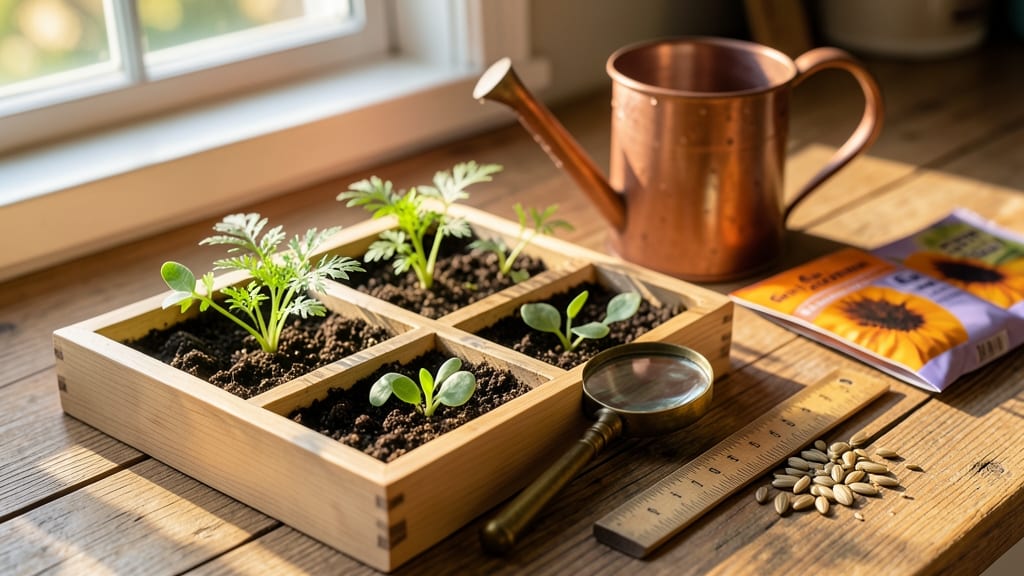
Mastering common flower seed identification means the difference between a garden full of surprises and one that thrives with exactly what you planted. 🌸 I’ve spent years sorting through seed packets, catalogs, and even mystery seeds from last year’s garden—here’s how to tell them apart without guessing.
Start by examining three key features: seed shape (round, flat, or elongated?), color (tan, black, or striped?), and leaf patterns (smooth, fuzzy, or lobed?). A magnifying glass helps spot tiny details like ridges or hairs that make all the difference between a sunflower and a zinnia.
Even the seed packet’s tiny sketches often hold clues.
Once you recognize the basics, you’ll know exactly how deep to plant each type, how far apart to space them, and what growing conditions they need.
My marigold seeds, for example, are tiny and wrinkled, while sunflower seeds are plump and ribbed—those differences tell me when to start them indoors versus direct-sowing outside.
This skill saves time, money, and frustration—no more waiting to see what pops up or dealing with overcrowded seedlings. Let’s break down the most common varieties so you can start confidently this season.
📚 In This Guide
- What you need
- Instructions
- Tips and common mistakes
- Wrapping up and next steps
What you need
- ● Magnifying glass (10x magnification or higher) – For examining tiny details like seed texture, shape, and subtle markings.
- ● Ruler or measuring tape – To gauge seed size (inches or millimeters) for precise identification.
- ● White or light-colored tray/plate – A clean surface (8"x10" or larger) to spread seeds for better visibility.
- ○ Soft-bristle paintbrush or tweezers – Gently handle seeds without damaging them (optional but helpful for delicate varieties).
- ● Field guide or printed reference sheet – A Common Flower Seed Identification Chart (downloadable or handwritten) with key traits (shape, color, leaf patterns).
- ● Notebook & pencil – To jot down observations like seed color, size, and location found.
- ● Small containers with lids (2–3) – For storing seed samples if you’re comparing multiple types.
- ● Digital microscope or smartphone with macro lens – For high-resolution close-ups of intricate seed structures.
- ● UV flashlight (blacklight) – Some seeds fluoresce under UV light, revealing hidden patterns!
- ● Seed identification app (e.g., PictureThis or PlantNet) – For quick digital comparisons.
- ● Moisture tray with damp paper towels – To test seed viability by observing germination (if you’re curious about growth potential).
- ● Glue dots or clear tape – Secure seeds to your reference sheet for a portable "specimen collection."
Step-by-step guide to identifying flower seeds by key traits
Mastering seed ID starts with understanding three simple traits—shape, leaf structure, and color patterns.
🌱 Step 1: Examine Seed Shape for Instant Clues
Seed shape reveals the plant’s family before you even see a sprout. Flat, oval seeds with a papery coating? Likely a snapdragon or foxglove. Round, smooth seeds with a glossy sheen? Probably a marigold or zinnia. I always start by holding seeds against a white background—uneven edges or ridges can point to delphinium or larkspur varieties.
Look for size too: Tiny, almost dust-like seeds belong to cosmos or bachelor’s buttons, while plump, kidney-shaped seeds are almost always nasturtiums. Here’s the thing—some seeds, like sunflower, have distinctive striations or patterns that act like a fingerprint. If you see parallel lines or a net-like texture, you’re dealing with a dahlias or rudbeckia seed.
🌿 Step 2: Study Leaf Structure for Family Confirmation
Leaf shape narrows it down further. Fuzzy, rounded leaves with serrated edges? Calendula or marigold. Long, lance-shaped leaves with parallel veins? Snapdragons or columbine. I keep a small magnifying glass handy—some seeds, like hollyhock, have tiny leaf scars or hairs that are invisible to the naked eye but confirm the variety.
Don’t overlook the arrangement. Alternating leaves suggest delphinium or lupine, while whorled leaves (three or more at a node) point to snapdragons or foxgloves. Pro tip: If the seed packet is missing, press a few seeds between two sheets of paper and scan them—leaf patterns often appear even before germination.
☀️ Step 3: Note Color Patterns and Seed Coat Texture
Color isn’t just about the flower—seed coats hold secrets too. Black or dark brown seeds with a waxy finish? Zinnias or cosmos. Light, papery white seeds with a net-like pattern? Sweet peas or lupines. I’ve found that poppy seeds have a distinctive “sandpaper” texture when rubbed between fingers—this rough coat is a dead giveaway.
Watch for color variations too. Seeds with red or purple streaks are often beet or sweet william, while uniform green seeds belong to nasturtiums or basil. Here’s where it gets fun: Some seeds, like four o’clocks, change color when exposed to light—start with them in a dark envelope until you’re ready to ID.
✂️ Step 4: Cross-Reference with Seedling Characteristics
Once you’ve narrowed it down, plant a few samples in a seed-starting tray. The first true leaves (not cotyledons) reveal the plant’s identity. Round, lobed leaves? Calendula. Feather-like fern leaves? Sweet peas or lupines. I always keep a small notebook by my grow lights—sketching the seedlings’ shape helps me spot patterns faster than any guidebook.
Pay attention to growth speed too. Fast germinators like marigolds or cosmos will sprout in 5-7 days, while slow starters like foxgloves or delphinium take 2-3 weeks. If your seeds don’t sprout within 14 days, they might be perennials (like peony or iris) or require stratification (cold treatment).
📝 Step 5: Build a Reference Library for Future ID
Take photos of each seed type and its resulting seedlings. Label them with traits like “round seed, fuzzy leaves, purple flowers” for snapdragons or “flat seed, serrated leaves, orange blooms” for calendula. Over time, you’ll recognize patterns—like how zinnias always have a papery seed coat with a tiny dimple, or how nasturtium seeds look like tiny, armor-plated beads.
Here’s the thing—some seeds defy easy ID. Dahlias, for example, can look like tiny acorns or pebbles. In those cases, I rely on seed packet clues (if available) or germination quirks—like how dahlias often sprout in 30-45 days and rudbeckias produce a single, dramatic seed head. Keep a “mystery seeds” jar for varieties you can’t ID, and research them later using a seed identification app or local gardening forum.
Tips & tricks for mastering flower seed identification
Here's what I've learned from years of sorting through seed collections—these little details make all the difference when you're trying to match seeds to their plants.
Lighting is Your Best Friend: Natural daylight or a bright LED lamp reveals seed details better than any flashlight. I've wasted hours trying to ID seeds under dim lighting—uneven shadows hide crucial textures and patterns. Position your seeds on a white surface (like a piece of paper or tile) to eliminate color distortion. For tricky cases, try a magnifying glass with a built-in light—it's worth the investment if you're serious about seed ID. The key is seeing those subtle ridges or color variations that separate similar-looking seeds like zinnias from cosmos.
Texture Tells the Real Story: Don't just look at seeds—touch them! The "sandpaper" texture of poppy seeds or the waxy sheen of marigold seeds are dead giveaways. I keep a small tray of common reference seeds (like nasturtium and snapdragon) to compare textures. For delicate seeds, use a soft paintbrush to avoid damaging them while you examine their surface. This tactile approach helps distinguish between similar shapes like delphinium and larkspur seeds that might look identical at first glance.
Seedling Speed Secrets: Remember those germination timelines from Step 4? Here's the thing—some seeds have predictable sprouting patterns that become second nature. Cosmos seeds often pop up within 5 days, while foxglove seeds might take 3 weeks. If you're testing multiple seeds, label them with their suspected varieties and track their sprouting dates. This creates a personal database of growth rates that becomes invaluable for future ID. Pro tip: Keep a moisture meter handy—too much or too little water can drastically alter germination times, throwing off your reference points.
Digital Documentation Wins: Snap photos of each seed type from multiple angles before planting. Use a macro setting on your phone camera or a simple scanning app to capture fine details. I organize these images by flower family (like "Lamiaceae" for mint family seeds) and add notes about texture, color, and any distinctive features. This digital catalog becomes your instant reference when you encounter mystery seeds later. For the most accurate comparisons, store images in a well-lit folder where you can view them side-by-side—your eyes will start recognizing patterns you couldn't see when looking at individual seeds.
Pro Tips for Common Flower Seed Identification
- Here's what I've learned from years of sorting through seed collections—these little details make all the difference when you're trying to match seeds to their plants.
- Lighting is Your Best Friend: Natural daylight or a bright LED lamp reveals seed details better than any flashlight.
- Texture Tells the Real Story: Don't just look at seeds—touch them!
Frequently asked questions
How do I tell the difference between flower seeds and weeds?
Weeds often have smaller, irregularly shaped seeds (like dandelions or crabgrass) compared to flower seeds, which are usually larger, rounder, or encased in pods. Check seed packets or reference guides—many flower seeds list distinct features like color, texture, or size (e.g., sunflower seeds are striped and plump). When in doubt, start with a seedling and monitor growth.
When is the best time to plant flower seeds based on their type?
Timing depends on the flower! Cool-season flowers (like pansies or snapdragons) thrive when soil temps are 40–60°F (spring/fall), while warm-season blooms (e.g., marigolds, zinnias) need 60–80°F soil (late spring/summer). Always check the seed packet for days to germination—some need light, others darkness. Pro tip: Use a soil thermometer for accuracy!
Can I save and replant seeds from store-bought flowers?
It depends! Hybrid flowers (like many petunias or impatiens) won’t produce true-to-type seeds—you’ll likely get weak or odd-looking blooms. Heirloom or open-pollinated varieties (e.g., cosmos, nasturtiums) are safe to save. Collect seeds when pods dry and split open, then store in a cool, dry place (paper envelope or jar) for up to 2 years.
Why aren’t my flower seeds sprouting? Troubleshooting tips!
Check these first:
- Moisture: Keep soil consistently damp (not soggy). Use a spray bottle for fine seeds.
- Depth: Tiny seeds (like impatiens) need just a sprinkle of soil; larger ones (e.g., beans) can go 1–2 inches deep.
- Light: Some (like lettuce) need darkness to germinate; others (like sunflowers) crave sunlight immediately.
- Temperature: Use a seedling heat mat if your home runs cold.
Still stuck? Try a germination test: Place seeds between damp paper towels in a plastic bag for 3–5 days. If they don’t sprout, they may be old or damaged.
What’s a good alternative if I can’t identify my flower seeds?
No stress! Try these workarounds:
- Seed swap: Ask local gardening groups (Facebook, Reddit) for help—many share photos or send samples.
- Plant anyway: Scatter seeds in a test patch of soil. Even if you don’t know the type, you might discover a surprise pollinator magnet!
- DNA testing: Services like Seed Savers Exchange offer seed ID kits for curious gardeners.
Remember: Some "mystery" seeds might be wildflowers—native plants are often the hardiest!
Wrapping up and next steps
Mastering common flower seed identification opens up a world of vibrant gardens and effortless planting! 🌸 By now, you’ve learned to spot key traits—like shape, color, and leaf patterns—that make each seed unique.
Whether you’re a beginner or a seasoned gardener, this guide gives you the confidence to turn seeds into stunning blooms.
Ready to take the next step? Start small:
- Pick 3-5 seeds from this guide to grow in your yard or containers.
- Join gardening forums or local clubs to swap tips and photos with fellow plant lovers.
- Experiment with seasonal varieties—spring bulbs, summer annuals, or fall perennials!